
From Small Hands to Big Change: Communities and Youth unite on an environmental goal
4 December 2025
On a humid November morning, a small crowd gathers in a patch of lush green vegetation about 20-30km outside of Suva. Among them stands Savu Nofoimuli, RISE’s Safeguards and Engagement Manager, who has guided dozens of community activities in informal settlements in Fiji before. None were quite like this one.
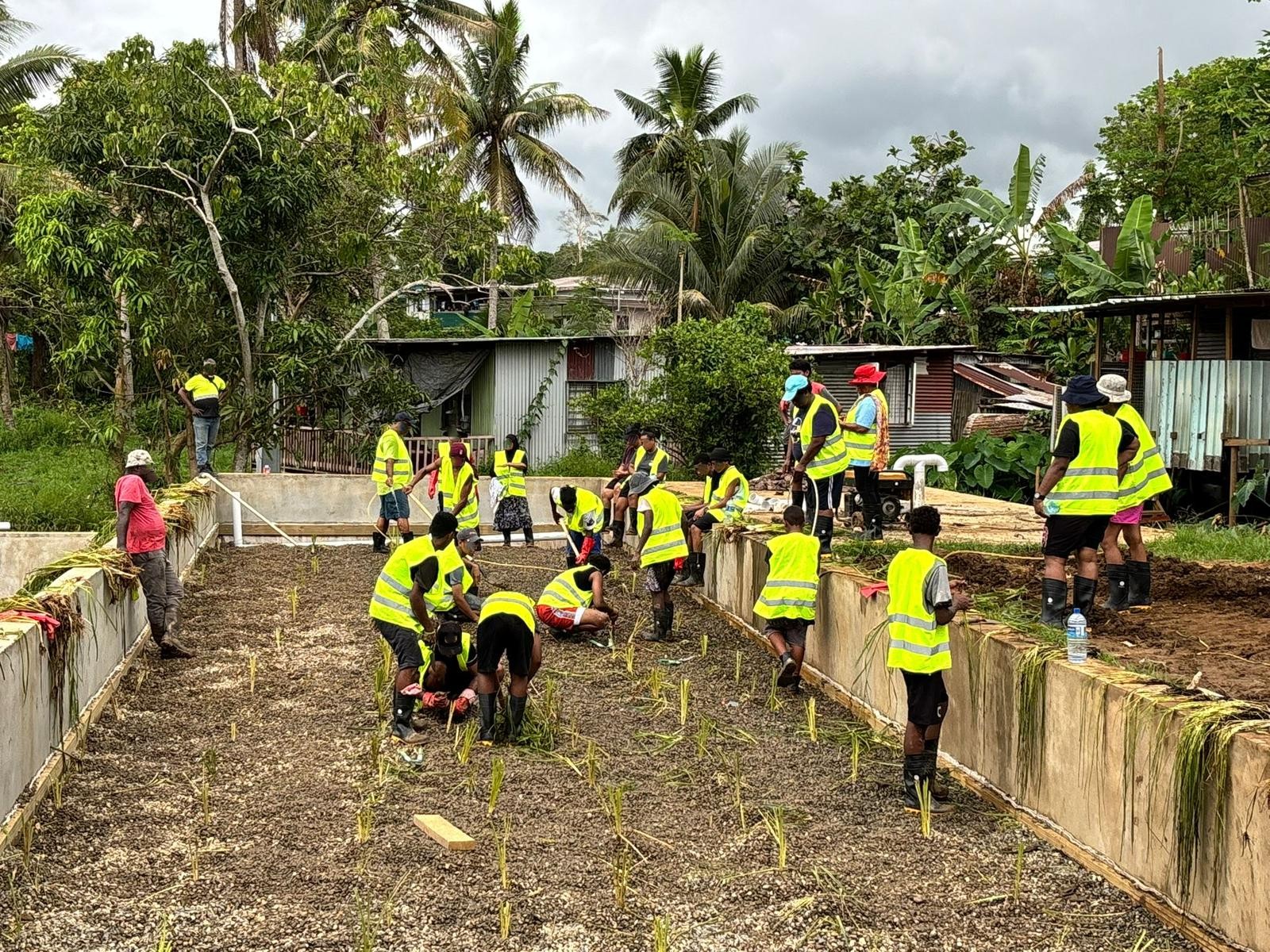
For the first time, members from multiple RISE informal settlement communities came together to help plant out one site’s newly constructed wetland treatment system. This included residents from settlements with no wetlands of their own, demonstrating the collective spirit across the RISE communities.
And at the heart of the collaborative activity was a surprising source of energy: the local youth.
A Greenhouse, Two Plants, and an Idea
The process began weeks earlier with a simple but strategic step involving a greenhouse, two plant species, and 34 test samples.
“Umbrella plants thrive in Fiji, but they’re more difficult for communities to care for in small, narrow constructed wetlands,” Savu explains. “We picked two easy to care for plant species based on the locally occurring species that have performed well in our existing wetland treatment systems and are easy to maintain.”
It was a small setup, but it held a big purpose: ensuring communities could care for the plants in the wetlands long after the RISE program steps back.
Savu invited members from three nearby settlements to join in harvesting and replanting the two species in a newly constructed wastewater treatment wetland in one of the intervention sites.
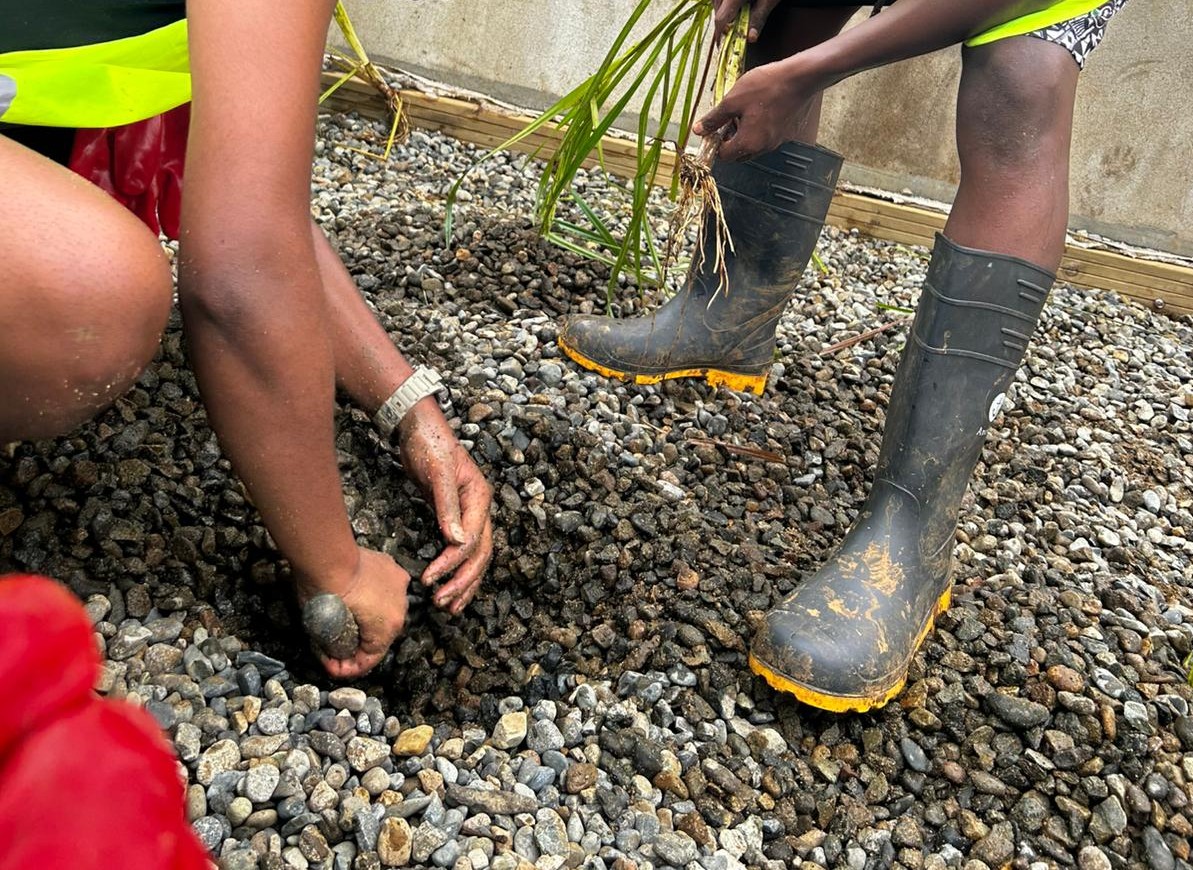
“This was an opportunity for residents to learn how wetland plants are harvested, planted within the wetland and monitored,” Savu says. “We talked about personal benefits for residents, who learned new skills, and how they can support another community’s infrastructure. That message really encouraged them to be involved.”
The turnout on the day exceeded expectations.
The Youth Step Forward
Not long before the harvest, something else shifted. A local group of students, school leavers and young job seekers heard about the RISE wetland activities and asked to participate.
“The youth were one of the most active groups in the community,” Savu says. “They came to the training about the wetlands and through that, the youth empowered themselves.”
One young woman, an environmental science graduate struggling to find steady work, pulled Savu aside.
“It’s refreshing,” she told her. “I’ve only had short-term jobs. This, (being involved in the RISE project) reminded me why I studied the environment. I’m happy to feel that again.”
On harvest day, more than ten youths - aged 11 to 21 years - arrived, forming the biggest turnout of young people for any wetland activity to date.
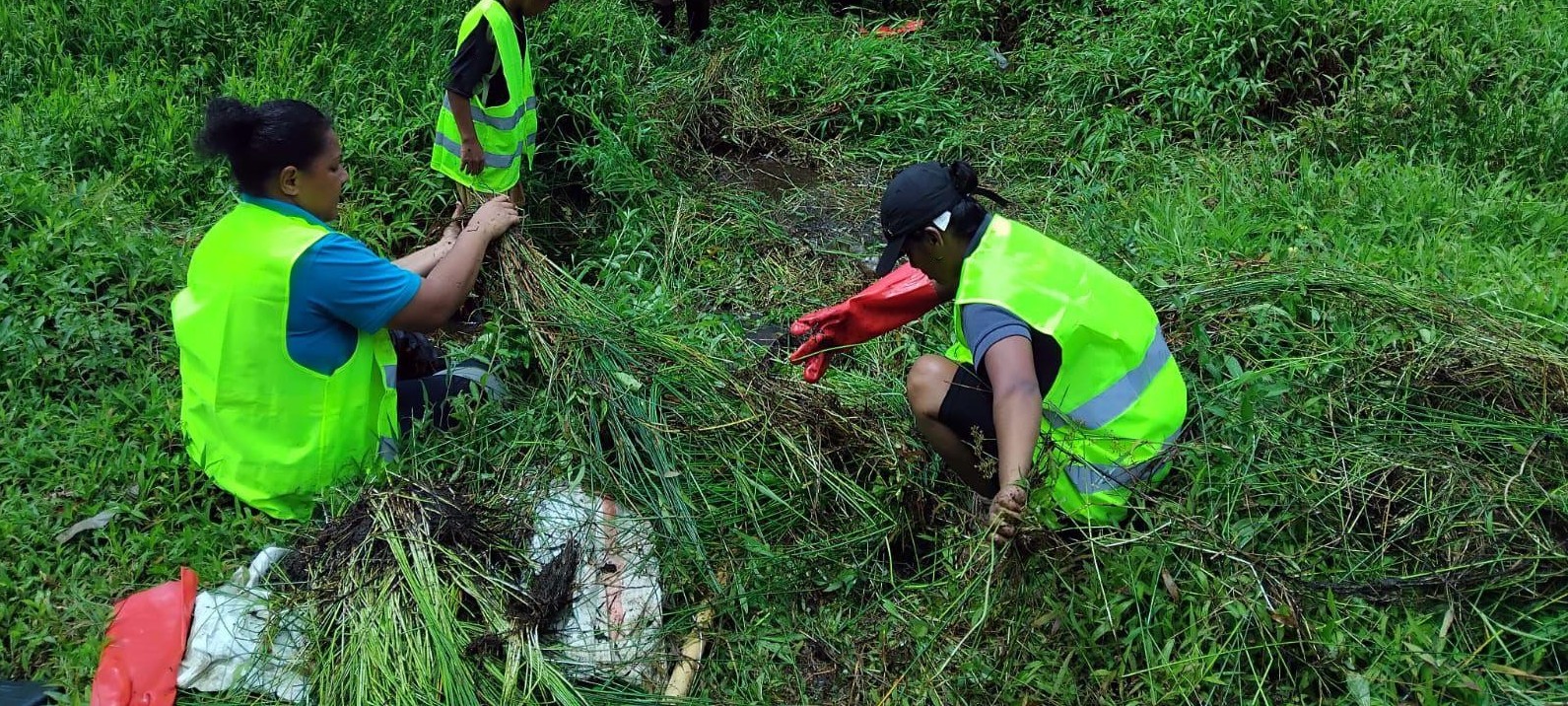
Above: Harvesting plants bound for replanting in the new waste water treatment wetland
This group didn’t wait for instructions.
“One of the plants was very hard to pull out of the ground,” Savu recalls. “So the boys agreed to handle the harvesting while the girls sorted and washed the plants. The group organised themselves before we even got there.
“That kind of initiative - that’s the change we want in informal settlements,” Savu says.
A First-Time Unity That Rewrote What’s Possible
The newly formed team, comprised of RISE staff, more than 25 residents of neighbouring communities and the youth group, harvested plants in one day and replanted the next, timed perfectly before a week of gentle rainfall.
Those involved have continued to message Savu afterwards:
“How are the plants?”
“Are they growing?”
“When can we help monitor?”
One woman who joined only the second day shared: “Now I understand how our wetland works. Planting helped me finally picture the science.”
Through their hands-on effort, they not only developed the wetland but also built a powerful sense of shared ownership and empowerment, demonstrating what’s possible when communities and groups unite.
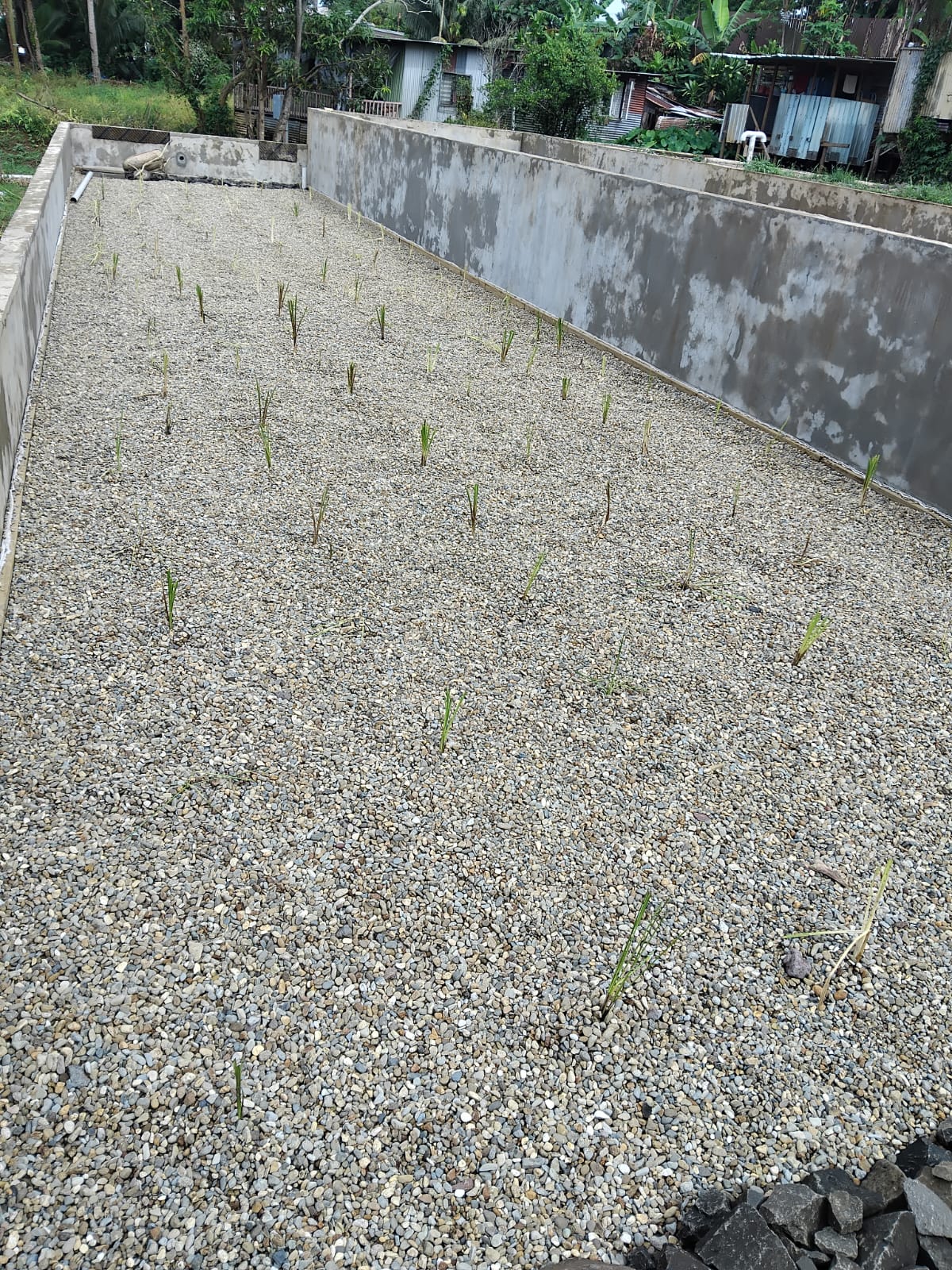
Above: The final product, the wetland
Growing With the Infrastructure
Savu believes this experience shows what’s possible when communities work together from the very beginning. “My advice is always that you need to grow with the infrastructure. When communities and youth join from day one, their knowledge grows as the system grows.”
Women and young people, she says, can shift perceptions of informal settlements and show future donors that communities can manage systems to ensure long-term success of environmental systems.
A Small Step With Big Meaning
Harvesting plants, and replanting in a wetland sounds simple. But it represents community engagement, shared skills and multiple communities working side-by-side toward a shared environmental goal.
Savu sums it up: “Dream big, but start small. This planting may look like a small step, but it’s the step that brought four communities and a youth group together for the first time. And from small steps, big blessings can grow.”
