
Cities Rising to Health: WHO highlights RISE program in new urban city guidelines
24 November 2025
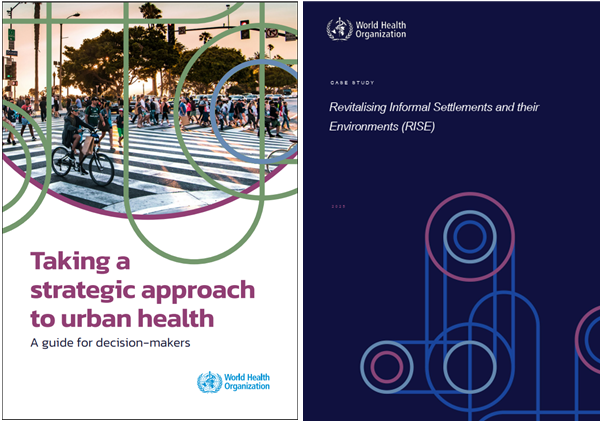
The World Health Organization (WHO) recently featured the RISE program as a case study in a new guide that supports decision-makers to develop healthier, resilient cities.
Since 2018, RISE’s transdisciplinary team has worked with urban informal settlements in Suva, Fiji and Makassar, Indonesia – representing about 1700 households and almost 9000 residents – to design and implement a complex water and sanitation intervention.
RISE Co-Director and clinical trial lead, Professor Karin Leder, is delighted to see the program feature in the WHO guide, ‘Taking a Strategic Approach to Urban Health’, and associated case studies.
“By featuring RISE as a case study, WHO has recognised that the integrated RISE approach for addressing intertwined challenges empowers residents to contribute to research and provide evidence on solutions aimed at improving daily life and building climate resilience,” Professor Leder said.
Together, RISE researchers and communities are developing nature-based water and wastewater systems suited to local conditions. Residents in upgraded sites have reported improved living conditions, and the RISE randomised control trial will determine the extent to which the water-sensitive revitalisation intervention reduces environmental contamination and boosts health, particularly in children.
Interrupting children’s exposure to environmental faecal contamination, a major cause of stunting and poor cognitive development in children, is a key objective of the RISE program.
RISE Co-Director and intervention lead, Professor Diego Ramirez-Lovering, explained how community partnership will drive real change. “Through community-led, nature-based water and sanitation systems, we’re showing that practical infrastructure solutions designed with communities can transform neighbourhoods,” Professor Ramirez-Lovering said.
More than 4.4 billion people are living in cities worldwide, and this number is increasing. An estimated 1 billion people are living in informal settlements, facing unsafe housing, inadequate sanitation and intensifying climate risks.
WHO released the report on World Cities Day, encouraging city and national leaders to adopt the strategic framework enabling healthier, fairer and more sustainable cities for all.

