
Where Are They Now? RISE PhD Graduates Shaping the Future
7 May 2026
The RISE PhD alumni community is a dynamic and accomplished network of scholars advancing knowledge, innovation, and leadership across diverse fields. Defined by academic excellence and a shared commitment to tackling complex global challenges, RISE graduates are making a meaningful, lasting impact across academia, industry, government and the non-profit sector. Their contributions reflect RISE’s core values: rigor, collaboration, and forward-thinking problem-solving.
We catch up with four RISE alumni to explore where their journeys have taken them since graduation - how their research has evolved, the paths they’ve forged, and the ways they are shaping the future in their respective fields. Their stories offer a glimpse into the real-world impact of a RISE PhD, and the many directions it can lead.
Dr Robyn Mansfield - Monash Sustainable Development Institute, Monash University (2022)
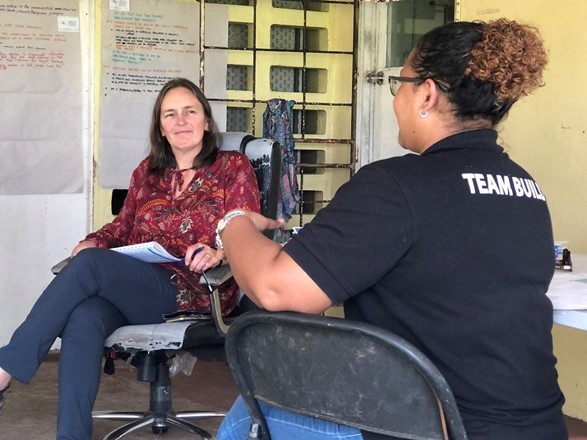
PhD topic: Mainstreaming children’s participation in urban planning processes for vulnerable settings
What are you doing now? How did RISE influence your career journey?
I am consulting in international development on issues such as climate resilience and social inclusive practices. RISE had a profound impact – it gave me hope that practices can change and it was heartening to see how communities were involved. The program reinforced my belief in inclusive processes for infrastructure development and I have enjoyed bringing that learning into a range of development projects since completing my PhD.
I loved the stories that emerged through my qualitative data collection which involved interviewing RISE researchers. I completed my data collection through Covid lockdowns and rarely met anyone face to face. A highlight was being given the opportunity to travel to Fiji at the end of the PhD to support colleagues run participatory training for the ‘Reflecting On Water and Sanitation Infrastructure’ toolkit rollout. I particularly loved seeing the gardens in the informal settlements – full of recycled materials, food plants, flowers, just beautiful.
Dr Emma Ramsay - Faculty of Science, Monash University (2022)
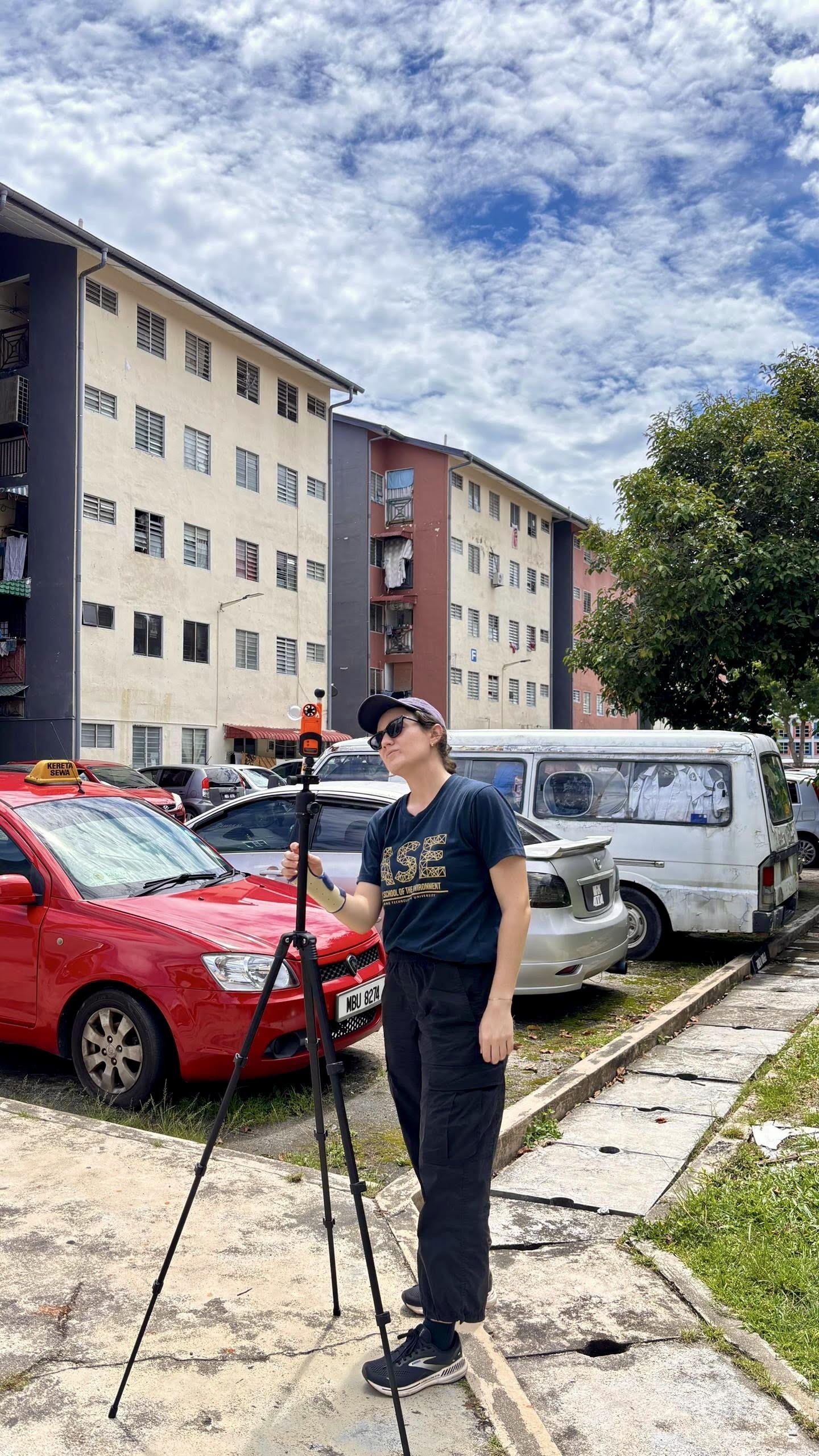
PhD topic: Understanding heat stress and patterns of mosquitoes in informal settlements
What are you doing now? How did RISE influence your career journey?
I am now a Lee Kuan Yew Postdoctoral Fellow at Nanyang Technological University, Singapore. I am also serving as a Lead Author on the IPCC’s Special Report on Climate Change and Cities.
My work focuses on addressing urban heat and other climate-health challenges in tropical cities and continues to be shaped by my time at RISE. For example, I have applied microclimate monitoring methods, developed with RISE, in other cities, and continue to collaborate closely with RISE researchers.
My favourite memories of RISE are connecting with researchers and practitioners across the globe. There is nothing like a hard day of fieldwork to form close team bonds!
Dr Dasha Moschonas - Faculty of Art, Design and Architecture, Monash University (2021)
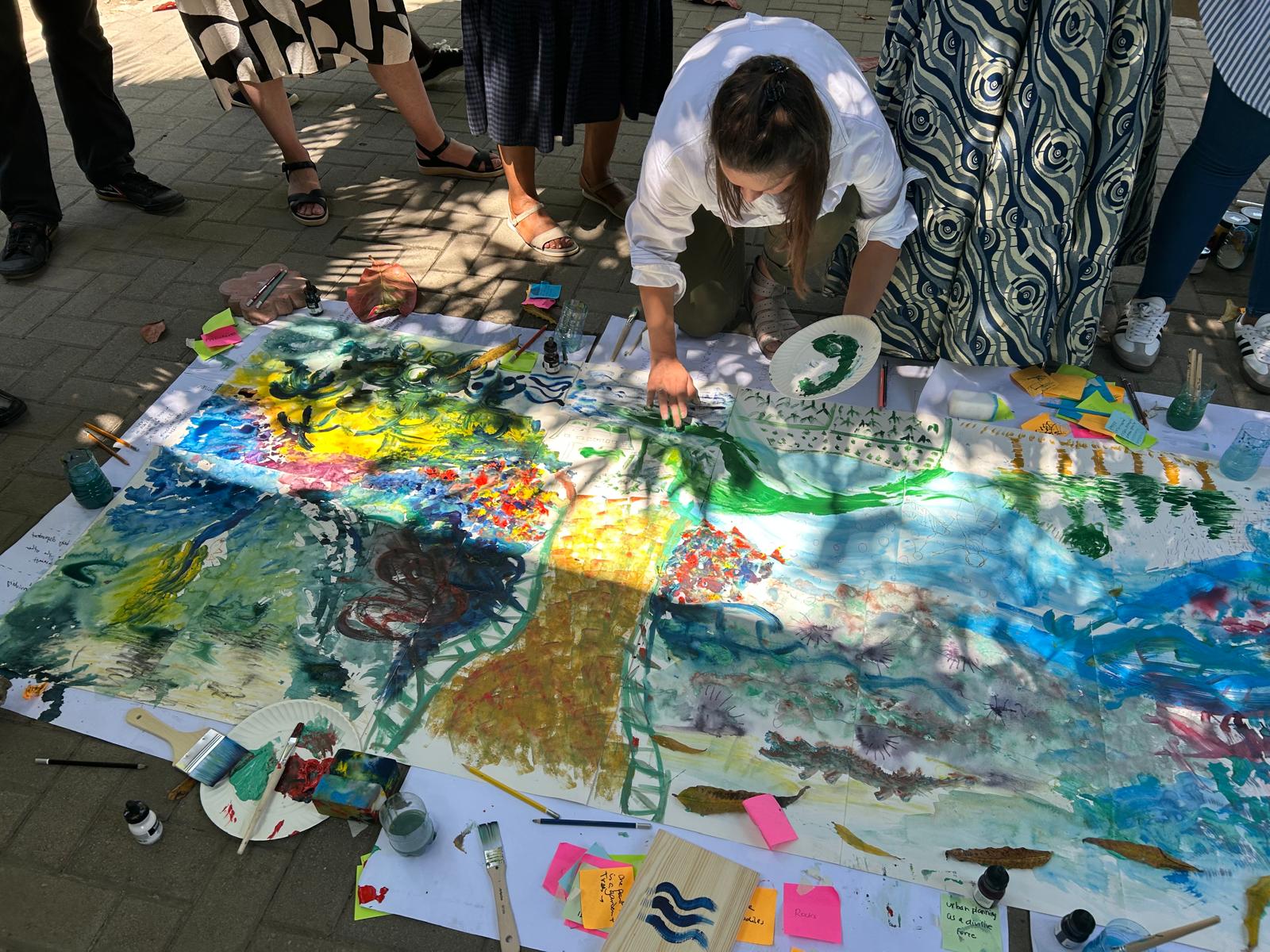
PhD topic: Entangled with water: Participation and design of water and sanitation infrastructure in Indonesia
What are you doing now? How did RISE influence your career journey?
After completing my PhD, I joined Arup in London, focusing on urban design and design research projects across the Global South. After a few years in practice, I decided to return to academia, and I am now a Post-doc Research Fellow at The Bartlett (University College London). I am currently working on another implementation research project, much like RISE, titled “Listen, Learn and Leap: Co-producing nature-based solutions in East African cities.”
My work is focused on informal settlements in Nairobi and Dar es Salaam. I spend a lot of time with our local teams, seeking to understand the relationship between nature, people, and the implications this holds for environmental and social justice.
My time and experience in RISE has had a deep influence on my work now. I decided to work on this project because there were so many new ideas and questions I had about nature and informal settlements, and because of my curiosity about the differences I would observe between East Africa and South East Asia, in terms of climate, urban systems and culture.
My favourite memories are connected to the time I spent with my RISE family in Makassar listening for bats, distinguishing between mosquito species and conducting deep ethnographic interviews with mothers, among the many highlights.
Dr Erich Wolff - Faculty of Art, Design and Architecture, Monash University (2022)
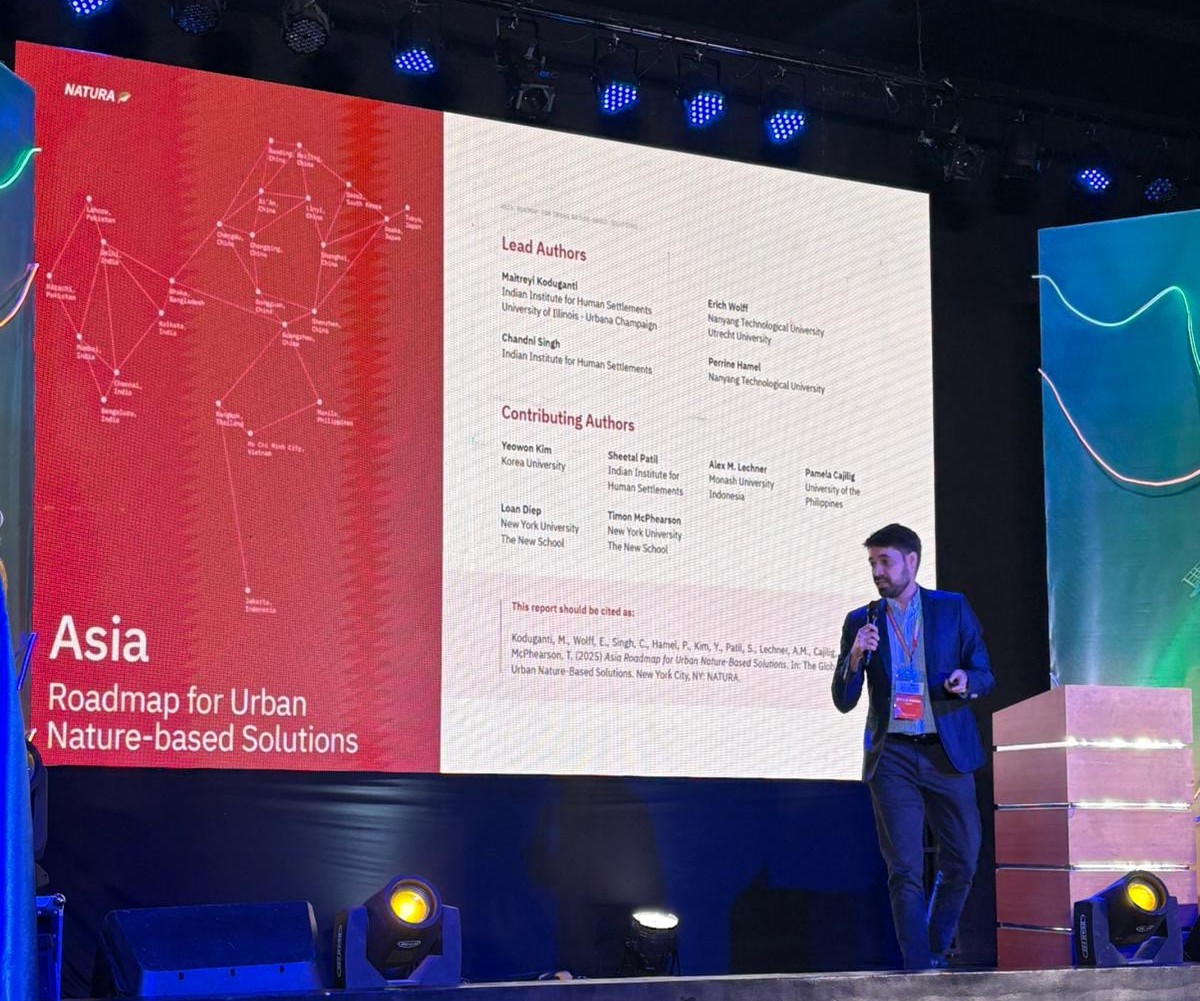
PhD topic: Accounting for Local Flood Knowledge in Citizen Science: Discussing Resilience and Adaptation to the Effects of Climate Change through a Flood-Monitoring Project
What are you doing now? How did RISE influence your career journey?
I am currently a researcher at Utrecht University (Netherlands), where I research the social, cultural and governance dimensions of nature-based solutions in different contexts. Before that, I worked as a researcher at the Nanyang Technological University in Singapore between 2022 and 2024.
Developing my doctoral research within the RISE programme taught me how to work as part of an interdisciplinary team, where I can share my work and find support for developing new ideas and establishing new collaborations. I also feel grateful for the professional connections I built through the RISE programme, and I am certain that they will continue being part of my academic and personal networks in the future.
The experience of collaborating with the RISE programme showed me the power of meaningfully engaging with colleagues from different countries, with different disciplinary, cultural, linguistic and personal backgrounds. The implementation of nature-based solutions must be deeply context-specific, striving to create meaningful connections with existing social practices, livelihoods and culture. These lessons still reverberate in my research, including my work as a fellow of the Asia Report of the Global Roadmap for Urban Nature-based Solutions.
It’s no coincidence that human engagement is the most treasured and transformative memory for our graduates. The RISE program fosters intellectual curiosity and practical application, but it leads with people.
We congratulate our graduates, whose collective achievements stand as a testament to the program’s mission of cultivating leaders who excel in research and drive positive societal impact.
