
Bridging the climate-health nexus: RISE at COP28
14 December 2023

This year RISE made its Conference of the Parties (COP) debut, engaging in global conversations at this foremost international climate meeting. The program represented as an innovative international research and development model for building resilience in the face of interconnected climate and health challenges.
In her opening address, RISE Director Professor Rebekah Brown shed light on the intricate linkages between climate change and human health. Speaking from the Monash Pavilion, she emphasised the undeniable interconnection of climate change impacts with both physical and mental wellbeing.
As the vulnerability of coastal communities and the Indo-Pacific's unique challenges took centre stage, Professor Brown emphasised the urgent need for international collaboration. The call for coordinated action resonates strongly as nations grapple with the dual challenges of environmental sustainability and public health.
RISE demonstrated the different innovative strands of our program in a range of sessions across the two-week event.
Scaling nature-based solutions
RISE’s panel event, ‘Mainstreaming nature-based solutions across a range of scales’ delved into the practicalities of scaling nature-based solutions.
Director of Upscaling Professor Tony Wong, Senior Engagement Specialist and urban planner Mere Naulumatua, and Chief Investigator and Assessment Project Manager Dr Ruzka Taruc showcased examples from RISE in Fiji and Indonesia, illustrating the unique socio-economic and technical environments enabling nature-based solution implementation.
Permanent Secretary at Fiji’s Ministry of Infrastructure and Meteorological Services Taitusi Vakadravuyaca discussed the Fiji Government’s experiences of working with RISE, alongside Water Sensitive Cities Australia Chief Executive Ben Furmage, who brought water-sensitive expertise to the discussion.
We have a global coalition of partners helping make these solutions a reality, and there is great promise for community-based water-sensitive infrastructure to be replicated at scale.
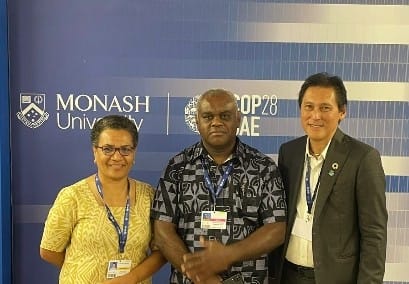
Left to right: Mere Naulumatua, Taitusi Vakadravuyaca and Professor Tony Wong.
Empowering change through gender-inclusive initiatives
Professor Wong presented our toolkit and policy brief designed to help WASH actors deliver more inclusive water and sanitation projects in informal settlements. These evidence-based resources were produced with support from the Australian Government’s Water for Women fund.
Co-lead of the research Associate Professor Becky Batagol from Monash Law said, “If we don’t consult those for whom we create infrastructure, it won’t be used.
“It’s a basic principle of fairness: nothing about us, without us. We can create climate resilient water and sanitation infrastructure if we work with everyone in communities to understand their needs and build around the realities of their lives," Batagol said.
Advancing urban water resilience
At a UN-Habitat session, Mere Naulumatua delved into advancing urban water resilience through local adaptation policies. Sharing insights on informal settlement challenges, she advocated for more inclusive environmental planning.
The session, moderated by Professor Chrysi Laspidou from University of Thessaly’s Civil Engineering Department, was an opportunity to underscore the significance of grassroots initiatives in achieving sustainable urban water management.
Linking the threads together
COP28 was a global platform to share ideas and solutions for responding to the unique health challenges that informal settlement communities face in the context of a changing climate.
From Professor Brown's emphasis on the vital nexus between climate change and health, to our team’s practical insights on nature-based solutions, and the focus on gender-inclusive community engagement, RISE is an example that there are alternative, better approaches to addressing these challenges.
We were thrilled to take the opportunity to share our commitment to fostering resilience in the face of intertwined climate and health challenges on the global stage.
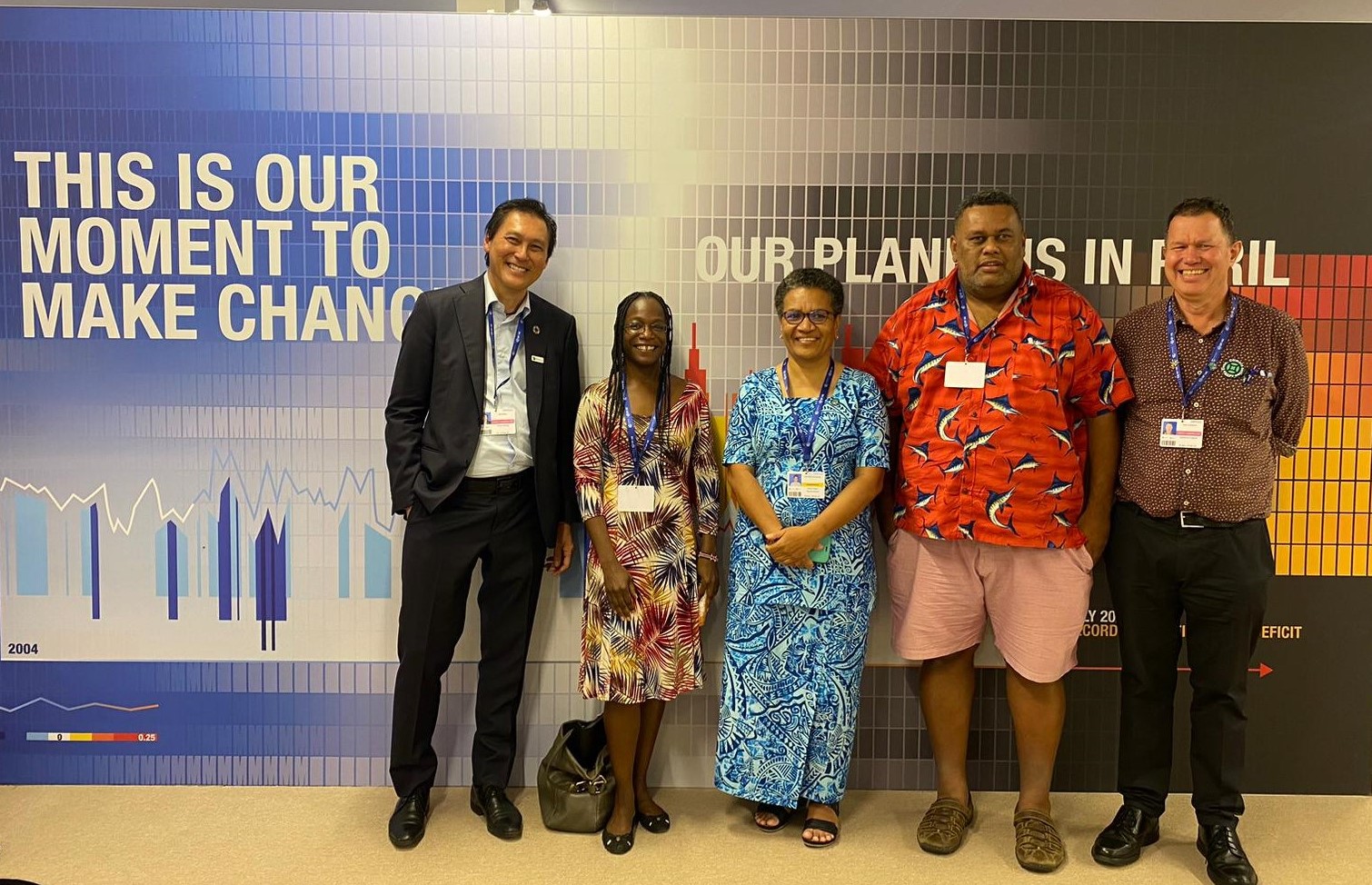
Cover image left to right: Tony Wong, Wellcome Trust Head of Capacity and Field Development Modi Mwatsama, Mere Naulumatua, Iliesa Wise and Monash Sustainable Development Institute Director Tony Capon.
