
Forum for informal settlements shows cross-sector support for housing, health equity in Fiji
23 October 2024

With cities being key to sustainable development in the Pacific, they are confronting the challenge of improving living conditions amidst rapid urbanisation.
Almost one-quarter of Fiji's urban population now reside in informal settlements, and while that number continues to grow, projections may be underestimating the rate of urban growth.
The challenges facing informal settlements intersect with a range of social issues – from housing and land tenure insecurity, to lacking health, education and economic opportunities, all compounding the vulnerabilities of residents.
Collaboration across sectors is key to developing solutions that consider all aspects of urban life – with improvements to basic sanitation and health a key, urgent need.
A forum held today in Suva brought together government ministries, academic institutes, non-profits, development agencies, faith-based organisations, community groups and media, to discuss opportunities to work together to enhance access to critical services that can improve life in Fiji’s informal settlements.
RISE, together with program partners the Fiji Government and Fiji National University, hosted the event – the first of its kind in Fiji dedicated exclusively to the challenges and opportunities around informal settlements.
RISE is upgrading 13 informal settlements in Suva, Fiji, and 13 in Makassar, Indonesia, by building drainage and flood mitigation, elevated pathways, nature-based solutions such as constructed wetlands and rainwater harvesting. These upgrades aim to improve water and sanitation services and enhance climate resilience.
The forum set out to explore RISE’s upgrading approach, and how actors across relevant sectors can contribute to the program’s mission of transforming urban health and wellbeing.
Local communities and authorities must be involved in decision-making
Presentations explored how RISE is taking a participatory approach, by engaging collaboratively and inclusively with residents as decision-makers.
With climate disasters disproportionately affecting urban communities, especially those with limited socio-economic resources, empowering communities as co-designers of solutions is essential to ensure resilience strategies reflect local priorities and needs.
Making stakeholder support is also a priority – at all levels of government, and across ministries. Fiji’s Minister for Housing and Local Government Maciu Nalumisa announced the establishment of a new cross-cutting body that is committed to advancing RISE.
“To further amplify the impacts of the RISE program, we are establishing an inter-agency taskforce that will bring together key stakeholders and delivery partners.
“This higher-level taskforce will build on the work of the existing RISE Technical Coordination Committee, which meets monthly, to drive our collective efforts,” the Minister said.

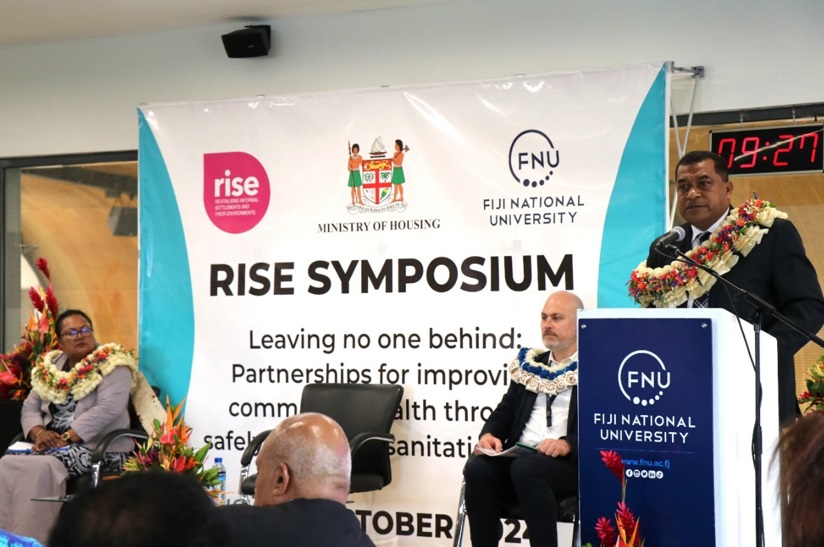
The Government of Fiji has committed FJ$2 million in funding for RISE, to enhance access to sanitation services and improve
drainage in Suva’s informal settlements.
Data key to unlocking better multi-agency responses
As part of scientific monitoring of the impacts of the upgrades in informal settlements, RISE is generating an unprecedented 10-year data bank tracking thousands of human, animal and environmental samples.
Through RISE, Fiji National University is conducting this cutting-edge research. Pro-Vice Chancellor of Learning and Teaching Prof Jimaima Lako said, “We have a purpose-built laboratory at the College of Medicine, Nursing and Health Sciences, where our scientists are being trained in the latest analytical techniques of environmental and human health samples,” she said.
“The lab and the trained and experienced staff our program is producing will be a lasting legacy for both FNU and Fiji.”
Participants discussed that sharing this powerful data can enable more effective coordinated responses across agencies. Because stakeholders have their own priorities, which can often result in fragmented responses to informal settlement challenges, this makes it all the more important, participants said, to bring findings to relevant authorities – from housing, to infrastructure, health and social services bodies – so that multiple sectors can drive multiple effective solutions.
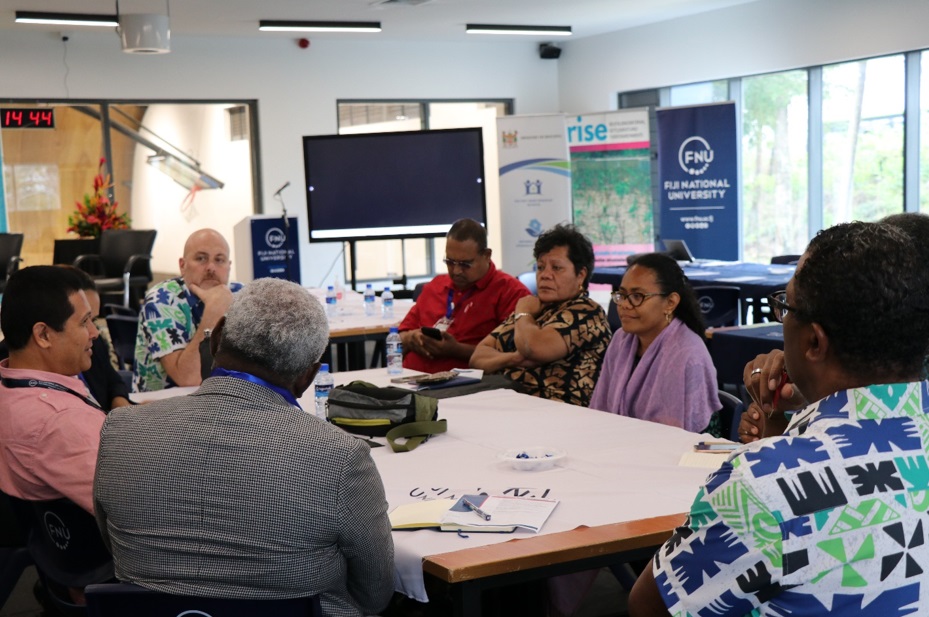
The potential is seen for RISE data on socio-economics, living standards, and challenges faced by informal settlement communities to drive
coordinated responses from different agencies.
Thinking long-term for sustainable impact
RISE’s informal settlement upgrades aim to benefit more than 5,000 Fijians, while generating important scientific evidence of the impacts of these upgrades.
Speakers and participants underscored the importance of taking these gains forward. Firstly, for communities and local authorities to maintain the infrastructure systems for generational access to critical water and sanitation services; and to continue utilising RISE data for further health and environmental studies, and evidence-based policy development for informal settlements.
There was great appetite from those in the room to bring their own experience and expertise to bear in taking these gains from RISE forward, in the pursuit of improving life in Fiji’s informal settlements.
WATCH: 2-minute summary and reflections.
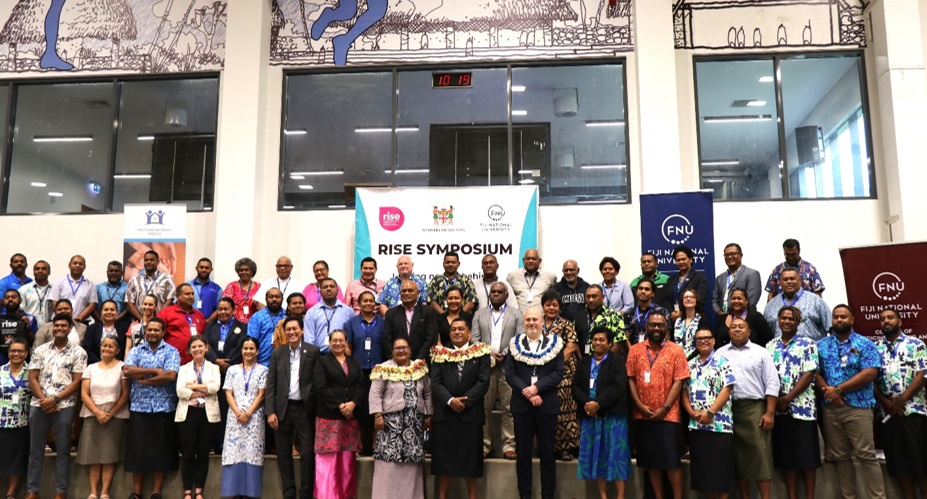
Forum participants were enthusiastic to collaborate across sectors to improve living conditions in Fiji’s informal settlements.
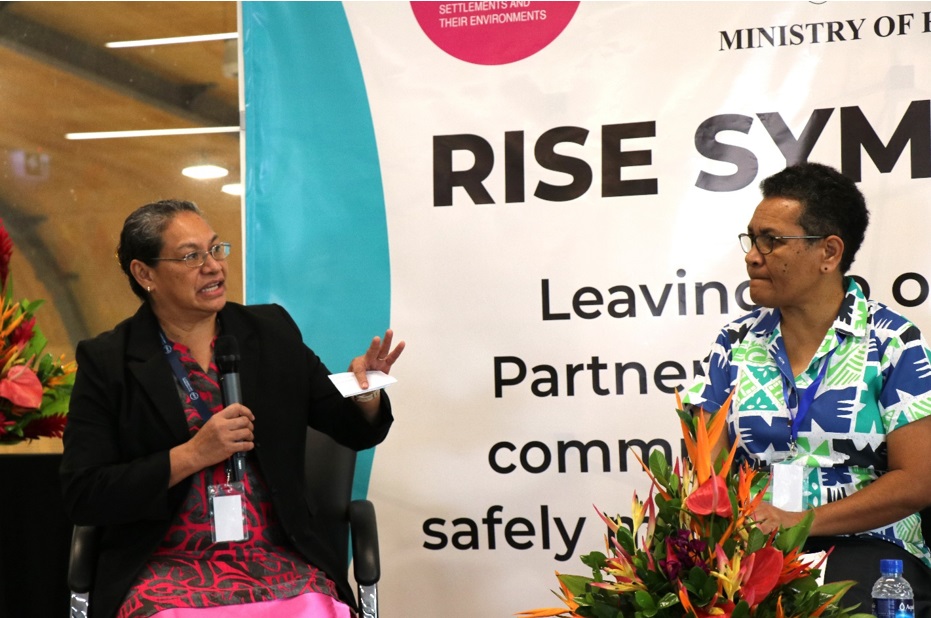
Cover image: Dr Luisa Cikamatana, Chief Medical Advisor to Fiji’s Ministry of Health and Medical Services (left) discusses how RISE data can be utilised for further health investigations that will benefit Fiji, with RISE Stakeholder and Engagement Specialist Mere Naulumatua (right).
