
RISE Indonesia launches first large-scale dual sampling campaign
9 October 2024
In September, the Makassar RISE team embarked on one of their most ambitious efforts yet—combining the 03 Health Campaign with the NHMRC Exposure Study. This marked the first large-scale sampling activity for the team, incorporating health surveys and child sampling (blood, faeces, anthropometry) alongside environmental exposure studies.
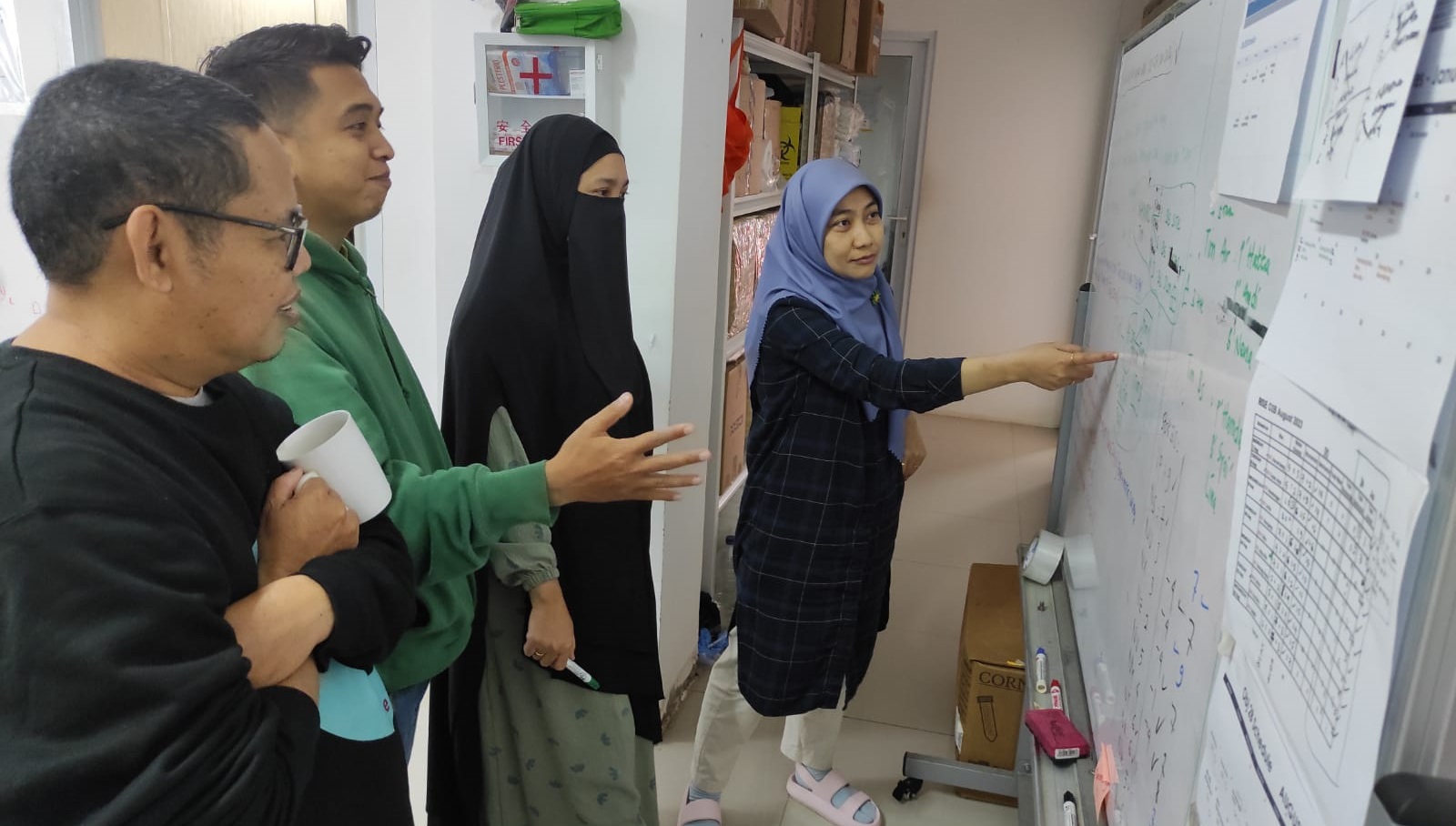
At the heart of this effort is Maghfira Saifuddaolah, the Assessment Lead for Makassar, who has been instrumental in managing both campaigns. “This is one of the most challenging campaigns we’ve faced, but the team has handled it smoothly. For the first time, we’re conducting two sampling campaigns simultaneously, which has required months of preparation, careful time management, and additional personnel.” Saifuddaolah’s leadership has been critical in ensuring the smooth execution of this complex undertaking, from logistical coordination to managing field teams and working closely with the community.

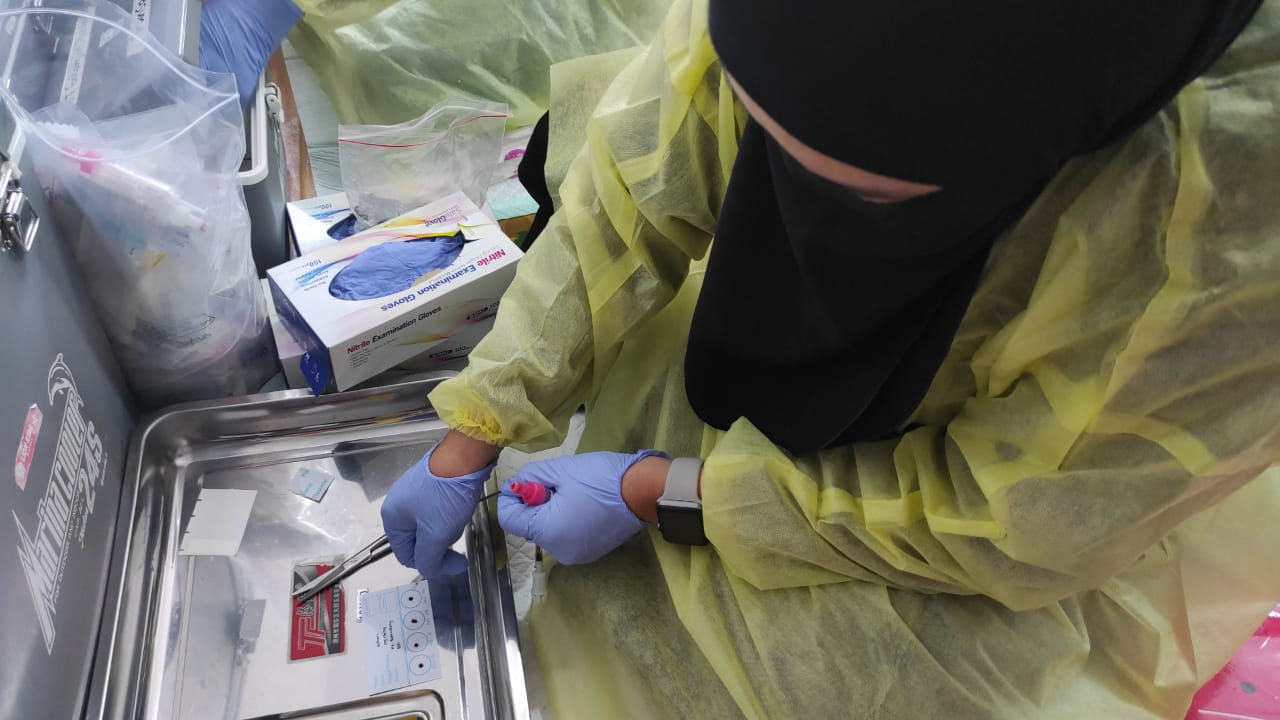
Herlina, RISE Indonesia Phlebotomist, working on blood sampling in the lab.
Running both campaigns together was a strategic decision to maximise efficiency and gather comprehensive health and environmental data from the community. While the 03 Health Campaign focuses on the impacts of sanitation on child health, the NHMRC Exposure Study collects additional outdoor and indoor environmental samples to assess contamination risks. These additional samples include child hand rinses, food and indoor surface swabs. By aligning these efforts, the team was able to streamline processes, reduce the overall burden on residents and ensure that both health and environmental data were captured simultaneously.
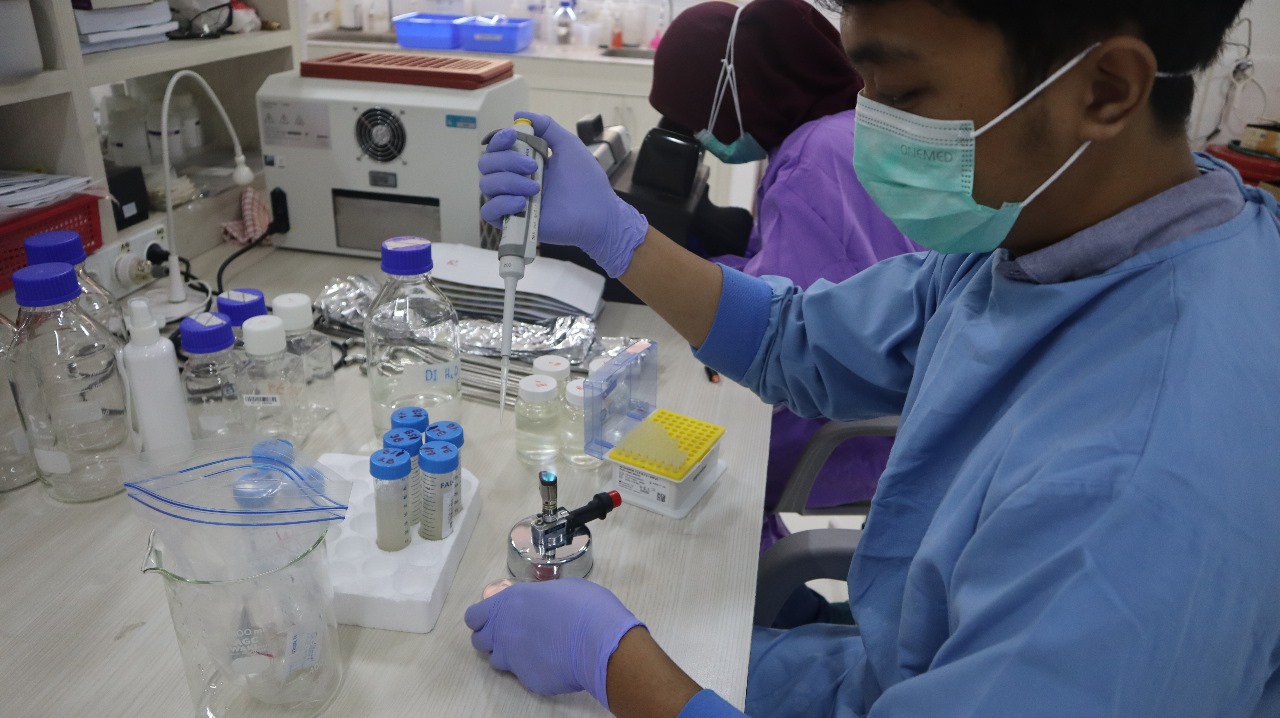
Khaerul Anam (front) and Triani (back), RISE Indonesia laboratory technicians, conducting and processing bootsock samples.
The field and lab teams faced the colossal task of handling various samples and maintaining the integrity of their work across different project objectives. To solve this, the team quickly realised they needed additional resources to streamline their process. The answer? Short-term research assistants.
These assistants were strategically placed across both field and lab teams, ensuring that tasks were efficiently distributed. In the field, four research assistants paired with RISE field staff to assist with everything from anthropometry to faecal sample collection, while in the lab, two assistants supported the core team in managing sample preparation and control tasks. This division of labour allowed the core team to focus on more critical functions without burning out.
One of the key challenges the team faced was how to efficiently transport samples between the field and the lab. For the first time, the team rented a car and hired a driver to manage transport. Previously, the field team had handled this themselves, but by outsourcing the task, they were able to maximise their time in the field. This was especially important to maintain integrity of the samples collected and allowing for the team to be able to process the samples within 8 hours of receiving them.
Effective communication with the community was critical to the success of the dual campaigns. The team used a multi-channel approach to keep residents informed and engaged. Pak (Sir) Hamdan, a respected senior community fieldworker, explained how he played a pivotal role in this effort. "I use our dedicated WhatsApp group to keep everyone updated. Before we go to the site, I send a message to each group, letting them know when RISE will be attending," he said. In addition to the messages, the team also conducted in-person follow-ups, visiting houses ahead of time to remind participants. "This approach helps streamline our efforts, allowing us to organise community gatherings efficiently for both campaigns."
child hand rinses, food and indoor surface swabs. By aligning these efforts, the team was able to streamline processes, reduce the overall burden on residents and ensure that both health and environmental data were captured simultaneously.
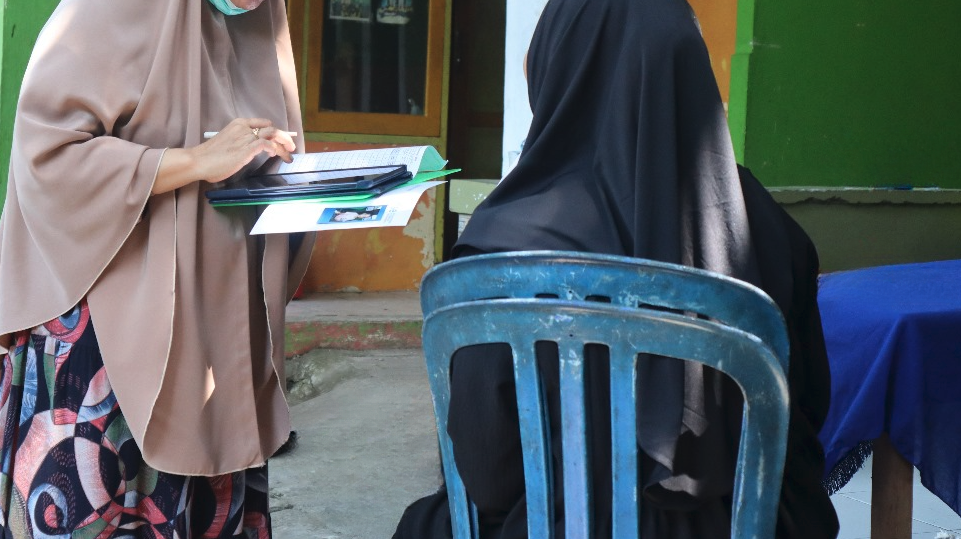
Rosnaena, RISE Indonesia Community Fieldworker, conducting a health survey with a resident.
Alongside ensuring clear communication with the residents, another challenge in a long campaign is maintaining the enthusiasm of the residents. The team addressed this by fostering direct communication, especially with mothers, to explain the importance of the health data collected. "We speak directly to the mothers about why the child’s health is important. We provide haemoglobin levels and show year-on-year comparisons, so they can see how their children are growing," Saifuddaolah noted. Additionally, small gifts and toys were given to children to ease any stress, while efforts were made to create a positive, welcoming environment for the families.
Through careful planning, clear communication, and community collaboration, the Makassar RISE team has set a new standard for executing large-scale health and environmental sampling campaigns.
Cover image: Maghfira Saifuddaolah, Assessment Lead for Makassar coordinating with the team to finalise the schedule, assign tasks, and organise the distribution team.
