
Rising temperatures, rising threats: Climate change and mosquito-borne diseases in informal settlements
7 February 2025

Mosquito-borne diseases are a global health threat, killing about one million people and infecting up to 700 million people annually — nearly one in ten people worldwide. With the ongoing impacts of climate change, the warming planet is extending the mosquito season in many parts of the world and allowing them to spread into new regions.
Rising temperatures, along with increasing frequency and intensity of extreme weather events - such as droughts, unpredictable rainfall, floods, and heat waves - can all contribute, in different ways, to an increase in the number of Aedes mosquitoes. For example, unpredictable rainfall can lead to increased water storage by people, which provides breeding habitats for Aedes, while heat waves can increase their breeding activity. This is important for public health because Aedes are known carriers of diseases such as dengue and chikungunya. This threat is even more pronounced in informal settlements, where poor drainage and lack of waste management can provide prime breeding grounds for mosquitoes.
RISE has been monitoring mosquito populations in informal settlements since late 2018 in Makassar, Indonesia and late 2019 in Suva, Fiji. This is to better understand the abundance and distribution of different mosquito species in communities, and to assess the impacts on mosquitoes of the water and sanitation infrastructure that RISE is constructing.
Field teams in Makassar and Suva conduct quarterly sampling rounds. This involves collecting mosquito samples from up to 15 houses per community over a three-day period. The mosquitoes are then transported to be analysed in the laboratory to identify species and track population trends.

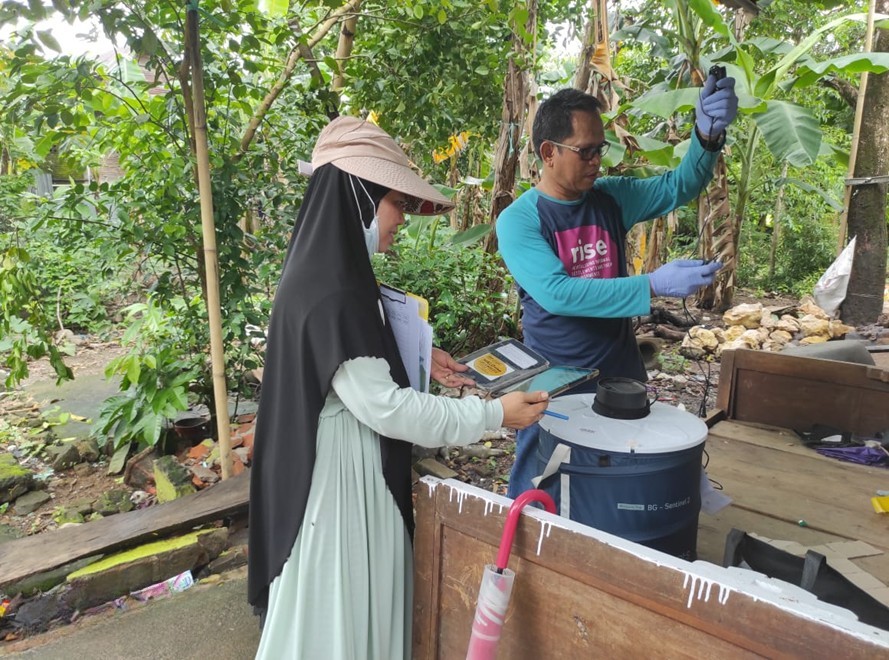
Field Research Assistant Ibu Rosnaena and Research Field Lead Hamdan Habsji install a BG Sentinel mosquito trap
at a home in a RISE settlement for three days. Mosquito samples are collected from up to 15 houses per community.
By the end of 2024, RISE’s laboratory technicians had processed 100,443 mosquitoes across Indonesia and Fiji. Researcher Genie Fleming, part of RISE’s Ecology and Environment team, points out, ‘’This large number of mosquitoes is not unexpected in the tropics, but it is a testament to our amazing teams who are able to efficiently sort through all these mosquitoes and identify their sex, and which of at least 11 species they are.”
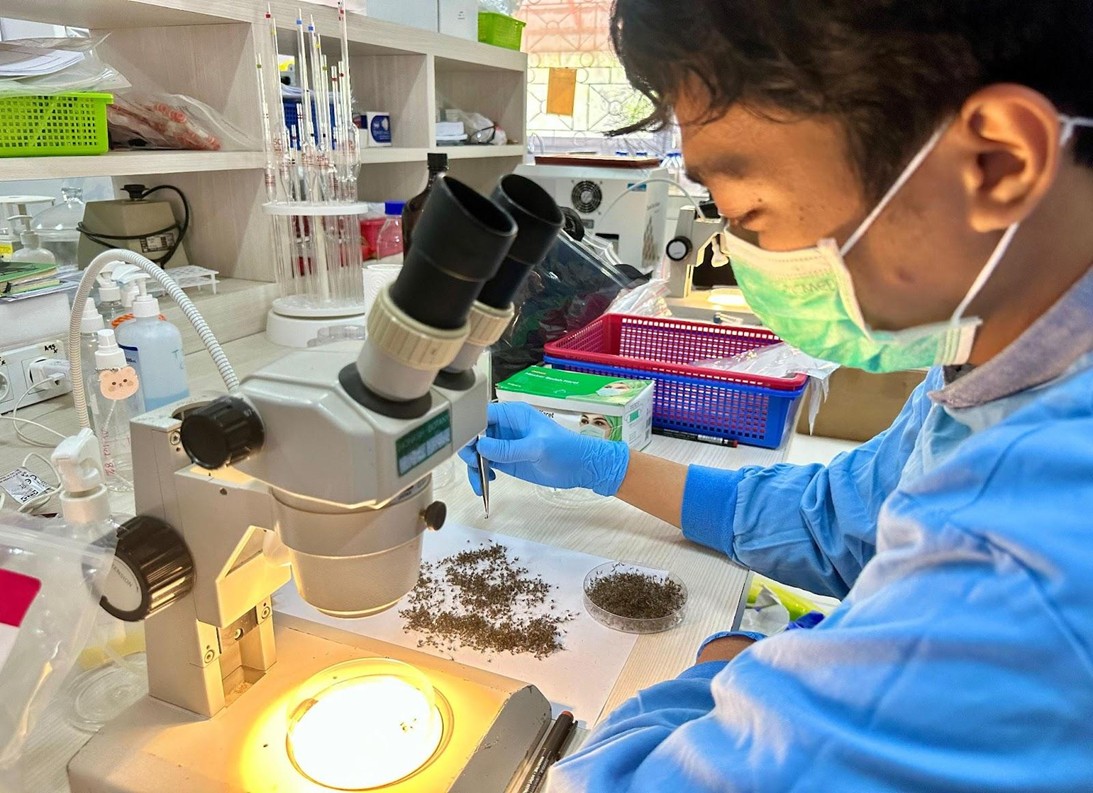
The work requires precision and patience. Laboratory Research Assistant Khaerul Anam Hattas (pictured in feature image), describes the process of identifying mosquitoes as both challenging and fascinating. “Mosquitoes have various patterns, which makes counting and identifying them in the lab an interesting task,” he said. Each quarter he counts and identifies mosquitoes that come into the laboratory at Hasanuddin University’s Public Health Faculty. He says the work makes him patient and focused. ''I have to focus when checking and identifying these mosquitoes.’’
In pursuit of reducing disease risks
RISE’s community upgrades are designed to improve environmental and human health in informal settlements, part of which involves improving drainage and water management systems that currently may be contributing to mosquito breeding. Fleming says, “At the community level and higher, improved sanitation and climate resilience can help reduce breeding opportunities for mosquitoes, if properly implemented.”
Addressing the rising threat of mosquito-borne diseases in the context of climate change demands a comprehensive approach that integrates scientific monitoring, environmental interventions, and galvanised communities. Fleming recommends increasing peoples’ awareness about safe water storage practices, hard waste reduction around homes, and self-protective measures like using protective clothing, mosquito repellent or nets as key to reducing disease risks.
Through ongoing mosquito monitoring and data collection, RISE will continue to uncover valuable insights into the connections between climate change, urban sanitation, and disease transmission in informal settlements, ultimately aiming to guide more effective strategies for long-term disease prevention.
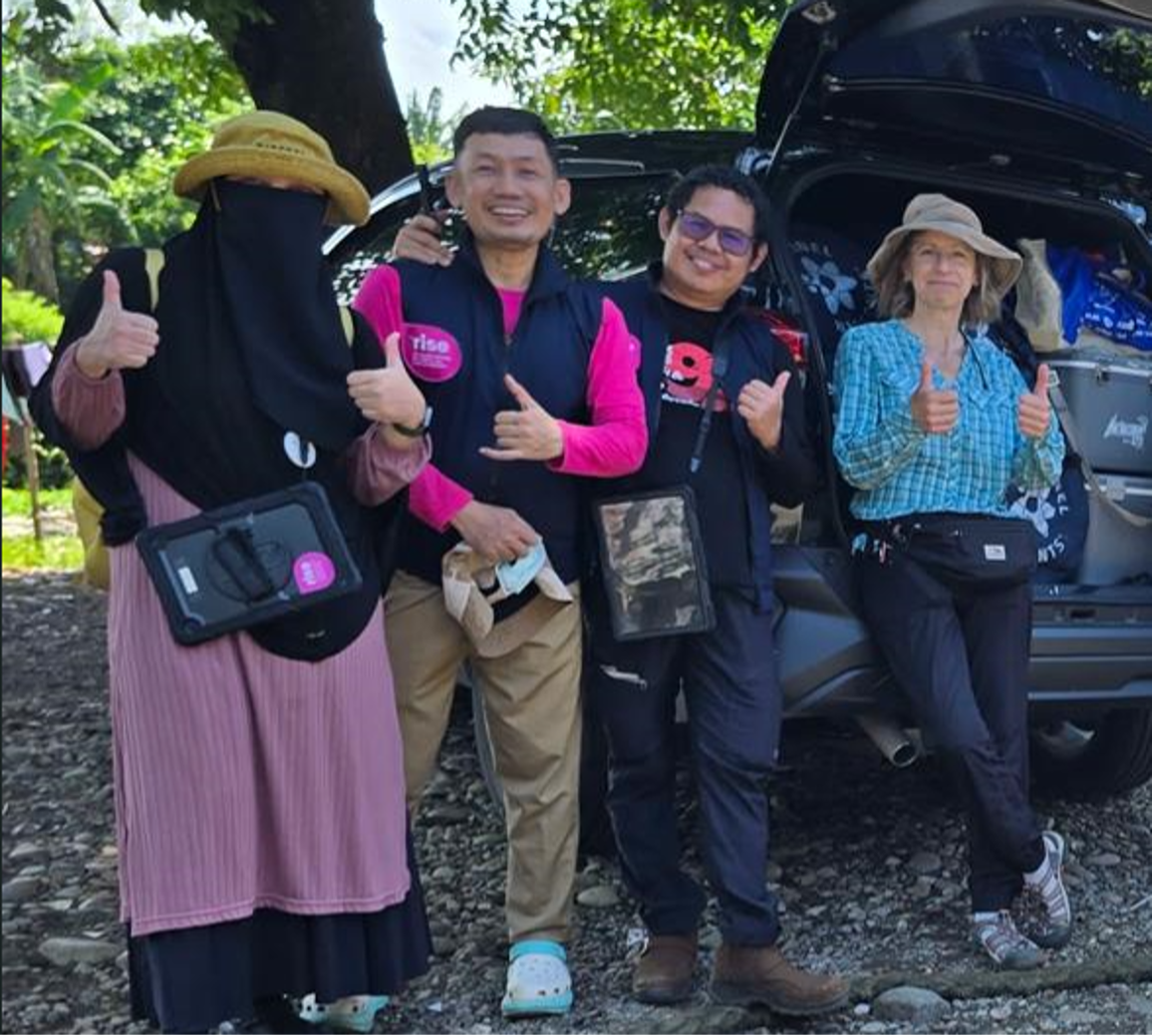
From left: RISE Field Research Assistants Herlina, Abdul Rajab and Mohammad Hatta with
Researcher Genie Fleming after collecting mosquito traps at a settlement in Makassar.
Cover image: Laboratory Research Assistant Khaerul Anam Hattas analyses samples of mosquitoes in the RISE lab.
