
Towards sustainable urbanisation in the Blue Pacific
17 September 2023
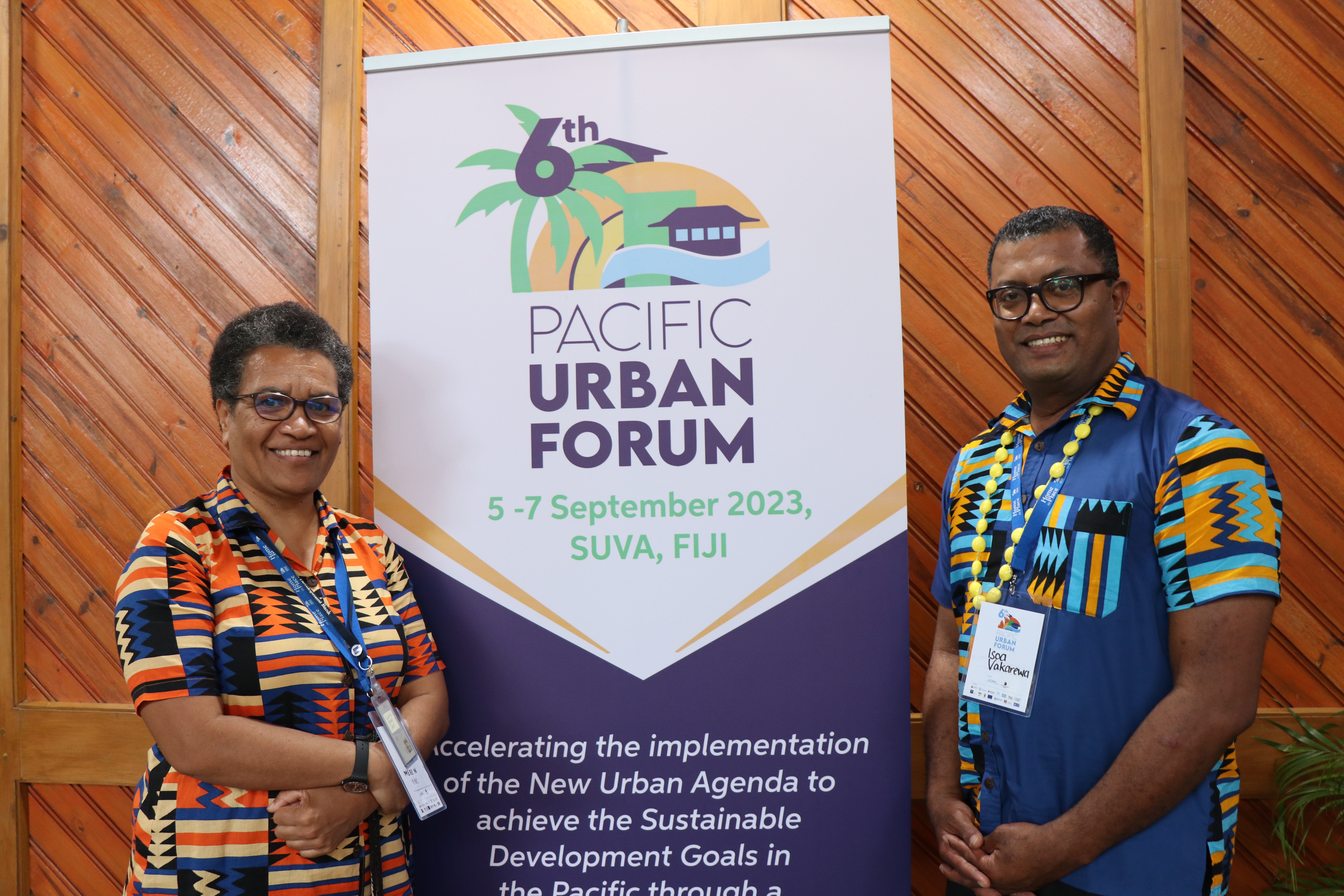
More than 250 participants from across the Pacific have committed to accelerating action for inclusive, safe and climate-resilient cities, towns and communities in Pacific Island Countries at the Sixth Pacific Urban Forum (PUF6), held in Fiji in September.
Around a quarter of people in the Pacific live in cities and towns, and the region is urbanising at rates well above the global average. This rapid urbanisation, intertwined with the region’s high level of vulnerability to climate change and disaster risk, is leading to a range of socio-economic and environmental challenges.
PUF6 brought together national and local governments, policymakers, urban development practitioners, civil society, traditional leaders, academia, private sector and development partners, and others from across the region and beyond to debate and imagine what a sustainable urban future will look like in the region.
Day one opening remarks by Samoan Prime Minister the Hon Fiamē Naomi Mataʻafa (pictured below) set the tone for PUF and captivated the room. “It is important to know who our partnership stakeholders are, and have an appreciation of diversity in values, in order to converge towards a partnership of equality and joint ownership.”
 RISE is implementing a water-sensitive approach to upgrading informal settlements – which more than one billion people around the world call home, with that figure continuing to rise.
At PUF6, RISE Fiji team members presented the program’s holistic approach to upgrading informal settlements, and the impacts it seeks to have on sustainable urban planning, health and wellbeing, and youth engagement.

Urbanisation links with health and wellbeing
The ways our cities are planned have major impacts on the health and wellbeing of communities. While urbanisation can bring health and economic benefits, rapid and unplanned urbanisation can have many negative social and environmental health impacts, which hit the poorest and most vulnerable the hardest.
Monash Sustainable Development Institute (MSDI) Director and Professor of Planetary Health, Tony Capon, hosted a session taking stock of current Pacific urban health challenges.
“In the Pacific, urbanisation is a contributing factor to the triple disease burden: non-communicable diseases, infectious diseases, and health impacts of climate change,” Professor Capon said.
“People, and their health and wellbeing, should be at the heart of urban planning and sustainable development,” he said, advocating for urban planning and policy investments to be informed by the potential to achieve better health and wellbeing.
Following a presentation on interventions for healthy cities by Dr Aaron Jenkins from the University of Sydney and Edith Cowan University, Iliesa Wise presented on the co-benefits of the RISE approach.
“The water-sensitive approach integrates conventional engineering systems with nature-based technologies,” Wise explained. “We anticipate multiple benefits – including increased protection from flooding hazards, improved water quality, wastewater recycling and alternative water supplies – all of which can contribute to healthier, more resilient urban communities.”
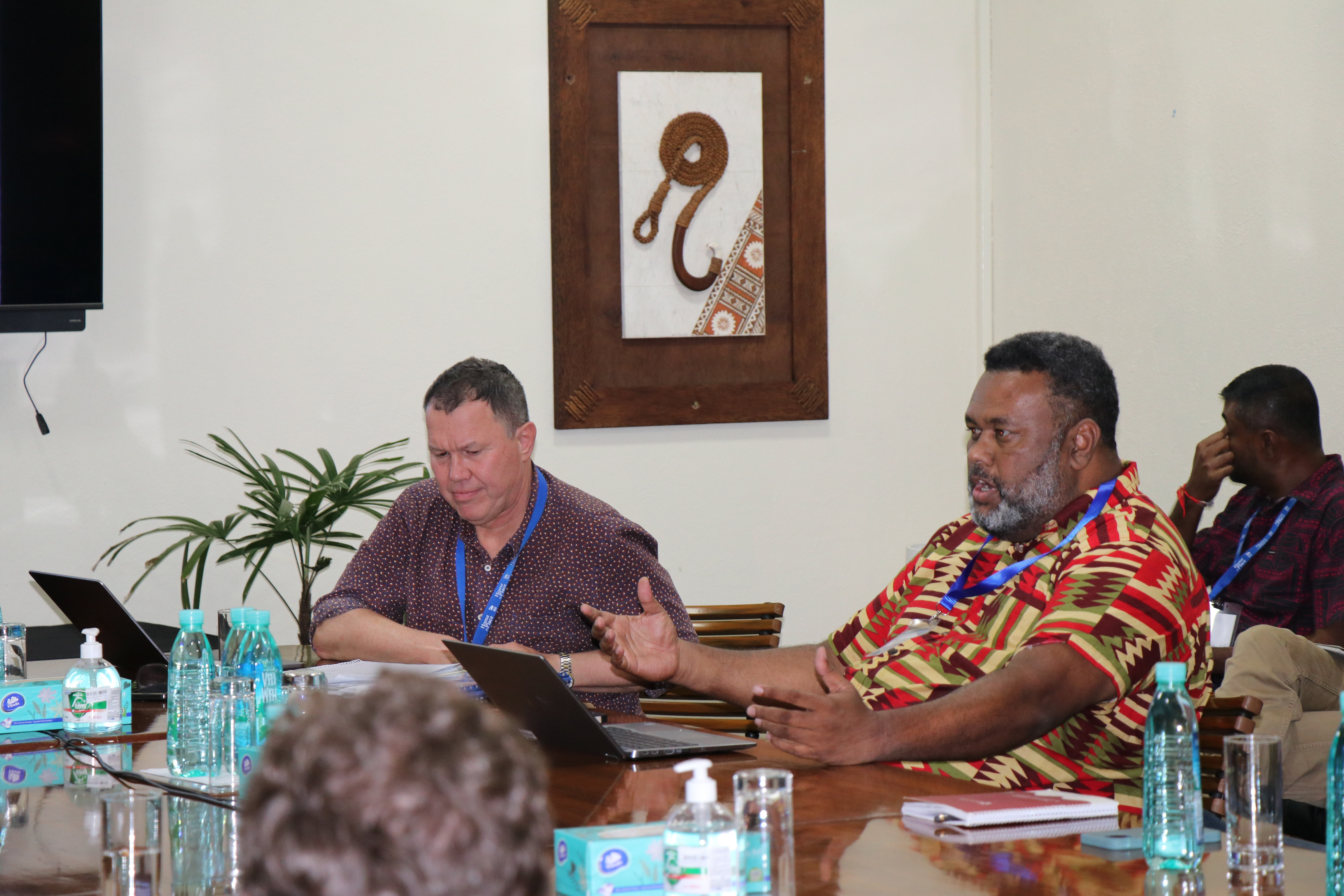 Professor Tony Capon (left) and Iliesa Wise (right).
Engaging youth in planning
Many Pacific Island countries are experiencing a ‘youth bulge’ – an expanding proportion of young people in the working-age population. And while passionate young people are contributing to influential transformation in sustainable urban development, many struggle to find pathways to become more engaged and have their perspectives understood.
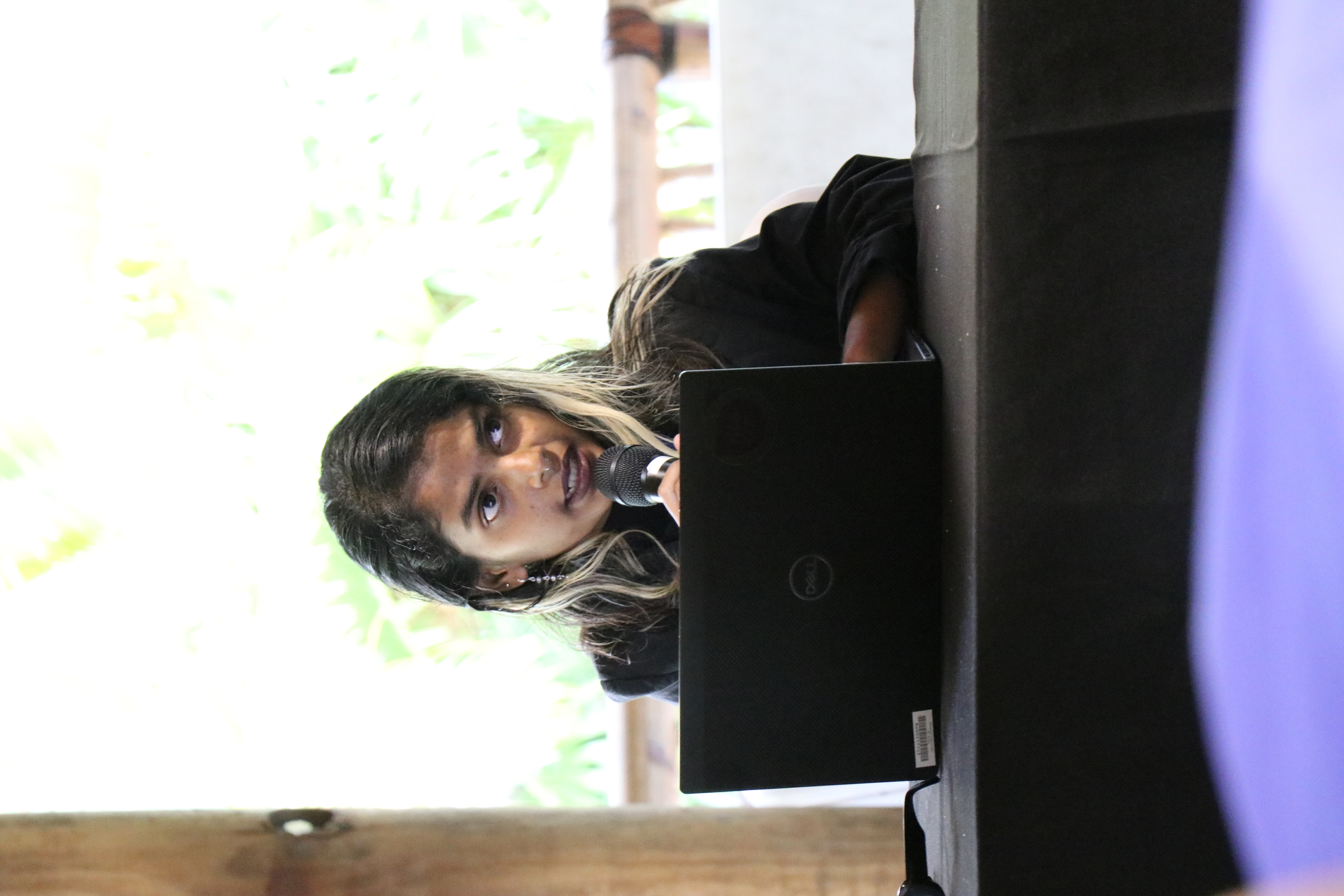
RISE’s Raniyah Muhammed engages with youth to design water and sanitation infrastructure that meets their needs.
PUF’s first Youth Talanoa session showcased their important role. RISE Community Engagement Officer Raniyah Muhammed shared her experiences of how RISE is engaging young people in informal settlement communities when designing water and sanitation infrastructure together.
“Every resident across the communities we work with is encouraged to help make decisions around water and sanitation upgrades for their neighbourhood,” Muhammed explained. “We hold bespoke activities for youth and children to uncover their perspectives on what being healthy and happy looks like, and how we can build more of that in to their own communities. My recommendation to the Forum is to be inclusive of youth planning and policy-making – so that their needs and wants are met when planning for a sustainable future.”
PUF6 outcomes will be shared at the 8th Asia-Pacific Urban Forum and COP28 later this year.
Through our trial and studying the impacts of water-sensitive revitalisation of informal settlements in Fiji and Indonesia, RISE looks forward to playing its part in accelerating action for inclusive, safe and climate-resilient cities and communities.
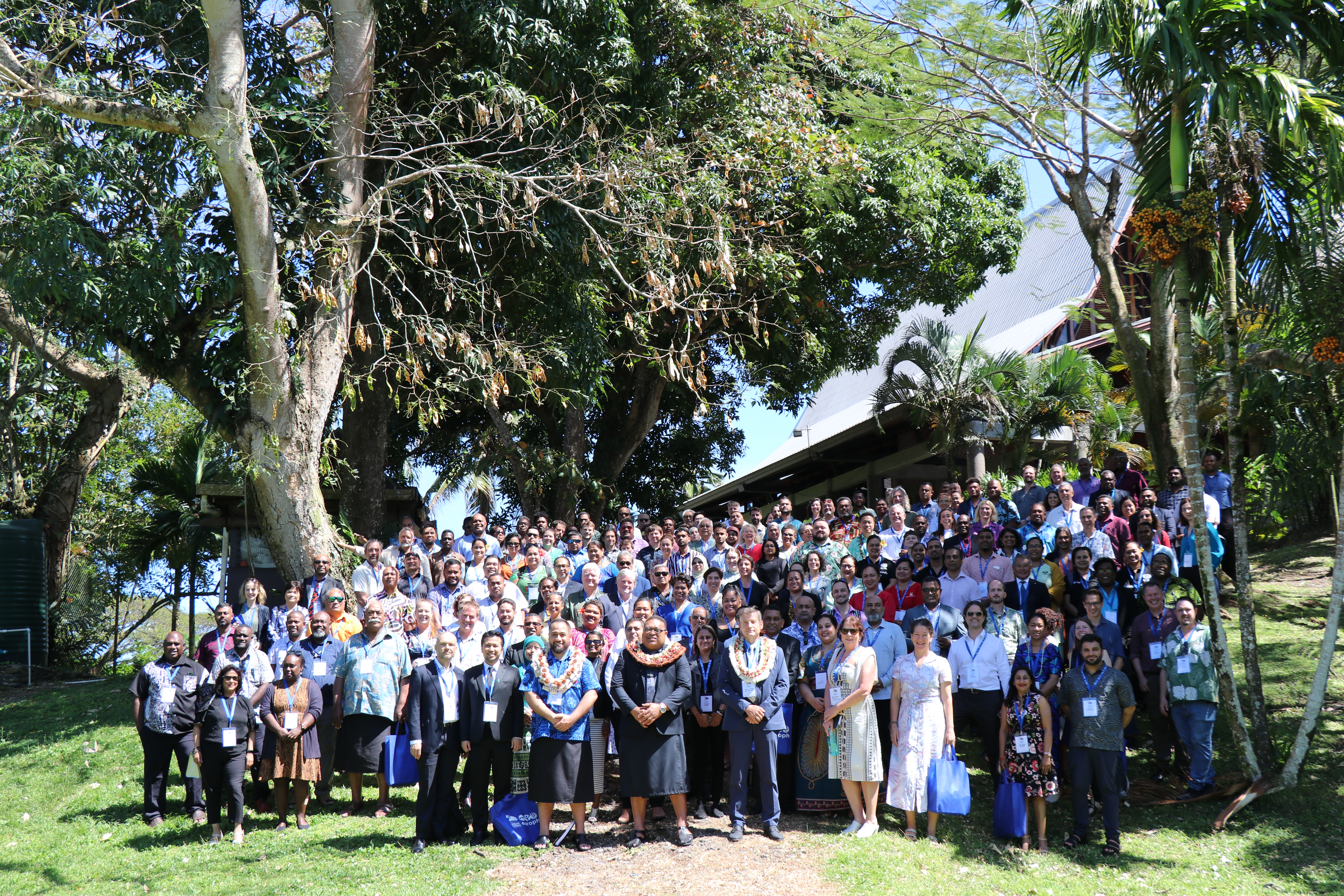
PUF6 participants from across the Asia Pacific committed to fostering sustainable urban development that prioritises resilience, justice, equity, and the protection of vulnerable communities, especially those living in informal settlements.
