
‘Transforming health in informal settlements demands new, creative solutions’: RISE at the 2024 Regional Meeting of the World Health Summit

24 April 2024
At this year’s Regional Meeting of the World Health Summit, RISE participated in crucial discussions on what can be done to enhance health and wellbeing in the Asia-Pacific region.
Hosted by Monash University in Melbourne, this year the Summit convened global leaders in health, politics, and science; practitioners, and planetary health experts, to focus on regional health challenges and set an agenda for a healthier future and wellbeing for all.
Presenting on the main plenary stage, RISE Senior Engagement Specialist Mere Naulumatua spoke about her experiences working with decentralised wastewater treatment as an intervention to improve human health and wellbeing, and how government, researchers and communities can work together to transfer this knowledge into policy and practice.
“About 1 in 5 people in Fiji's urban population live in informal settlements. The sooner we recognise and embrace the principle that informal settlements are integral to a city’s make-up, the better chance we have of making our cities fairer, liveable and thriving places,”
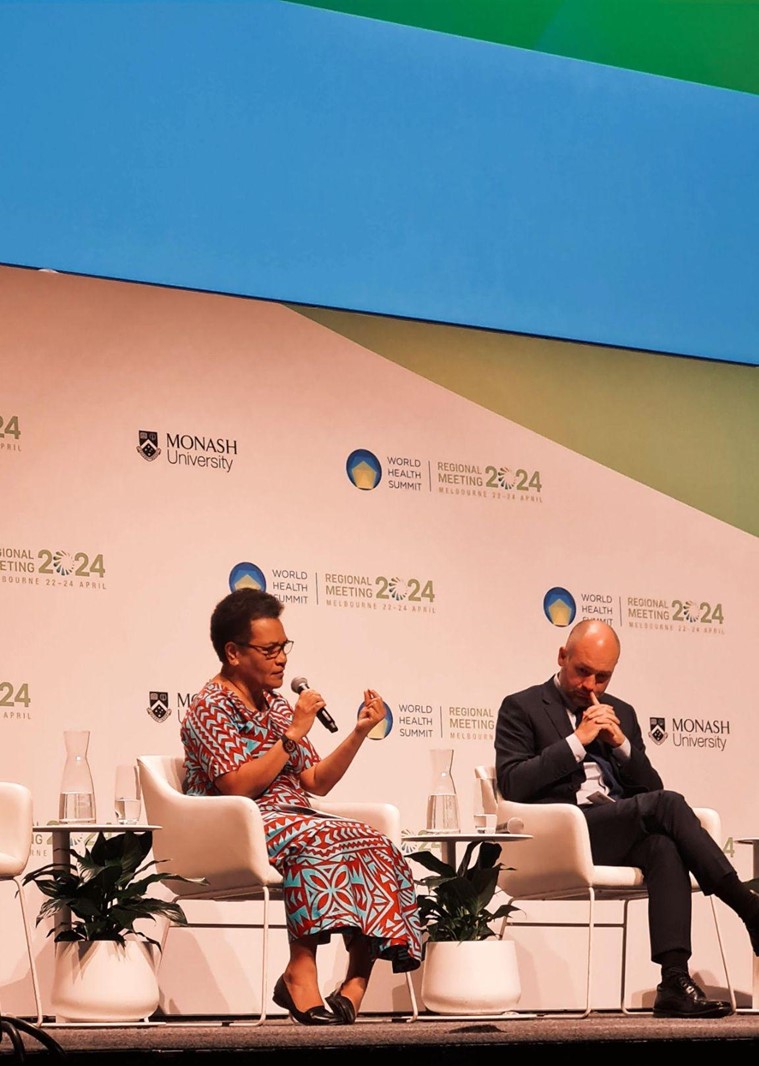
Mere Naulumatua presents at a panel during the Regional Meeting of the World Health Summit, Melbourne.
Following the plenary, RISE Directors came together to present on the program’s multi-faceted approach to planetary health and international development.
Discussions touched upon the integral role of informal settlements within the urban landscape, recognising them as essential components in creating fairer, more liveable, and thriving cities – reinforcing the importance of inclusive approaches to health and urban development.
RISE Program Co-Director Professor Karin Leder outlined the overarching challenges of poor health and lack of essential services faced by people living in informal settlements.
Acknowledging that “the problem and its solutions are multi-disciplinary and multi-dimensional”, Leder introduced RISE as a randomised control trial. “Our ambitious program aims to improve human, environmental and ecological health in informal settlements,” she said.
“It creates a new approach to understanding the interconnections between human and environmental health, provides urban water and sanitation services to under-served communities, and simultaneously also delivers robust research to prove its impact and value.”
Emphasising that complex challenges require new, creative solutions, Leder highlighted RISE’s focus on community engagement and capacity-building of staff, underscoring the importance of collaboration in driving meaningful change.
Fellow Program Co-Director Professor Diego Ramirez-Lovering delved into the infrastructure intervention, and RISE’s deployment of proven technologies in novel contexts — urban informal settlements in low- to middle-income countries.
“Beyond the novel infrastructure itself, one of the elements of the RISE approach which I believe to be the most paradigm-changing, is our intensive co-design process with residents – where communities play a critical role in developing solutions and building resilience in the process.”
Ramirez-Lovering emphasised the potential for community involvement to shape the impact and legacy of RISE and other similar programs.
Director of Scale-Up Professor Tony Wong closed out the showcase with an overview of RISE's scale-up strategy, which leverages existing capabilities to expand the program's reach.
He emphasised RISE's role in forging new pathways for governments and funders to address climate change and other pressing challenges, calling for renewed partnerships and funding models to sustain RISE's momentum.
“Through programs like RISE, Australia is committed to ambitious and practical action on climate change, shared prosperity, and supporting resilient communities in the Indo-Pacific. We are showing it is possible; that the approach can utilise local expertise and materials, can align with local government policies, and can be economically effective.”
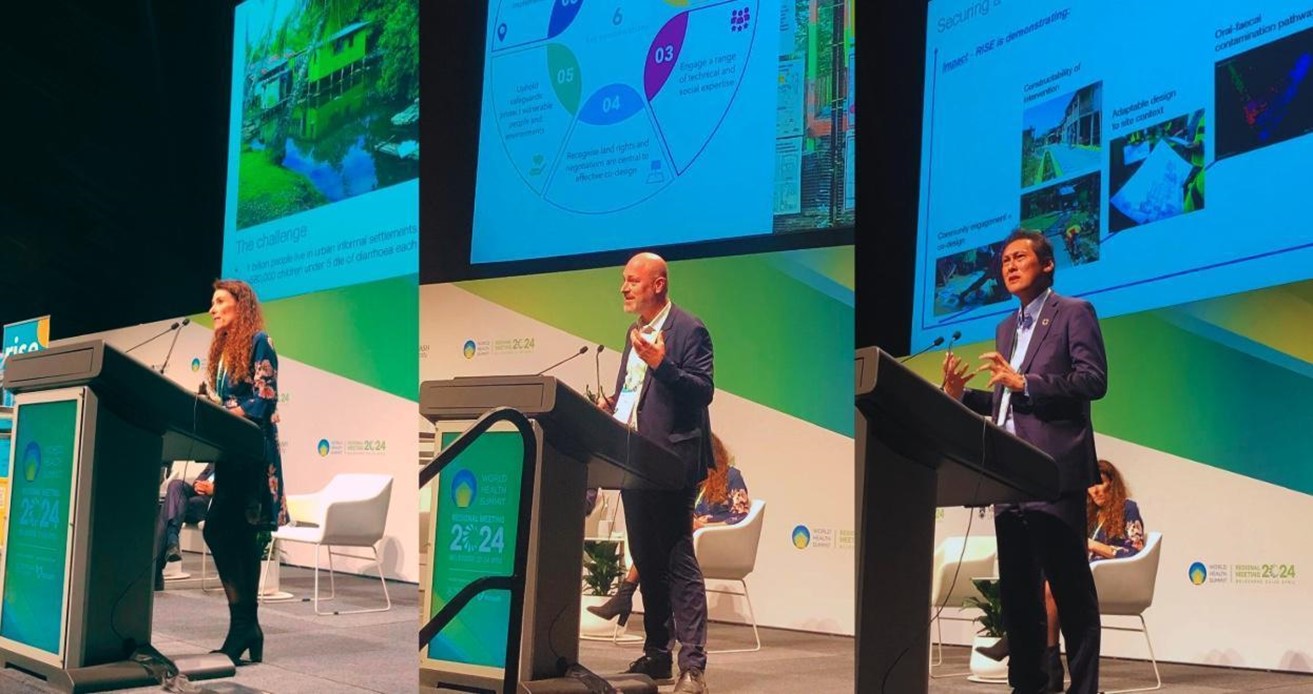
Left to right: Professors Karin Leder, Diego Ramirez-Lovering and Tony Wong present on RISE’s science, infrastructure, and scale-up approaches.
With attendees joining for further discussions in the main foyer, the Summit was a fantastic opportunity to spark conversations and inspire collective action towards a healthier, more sustainable future for the region.
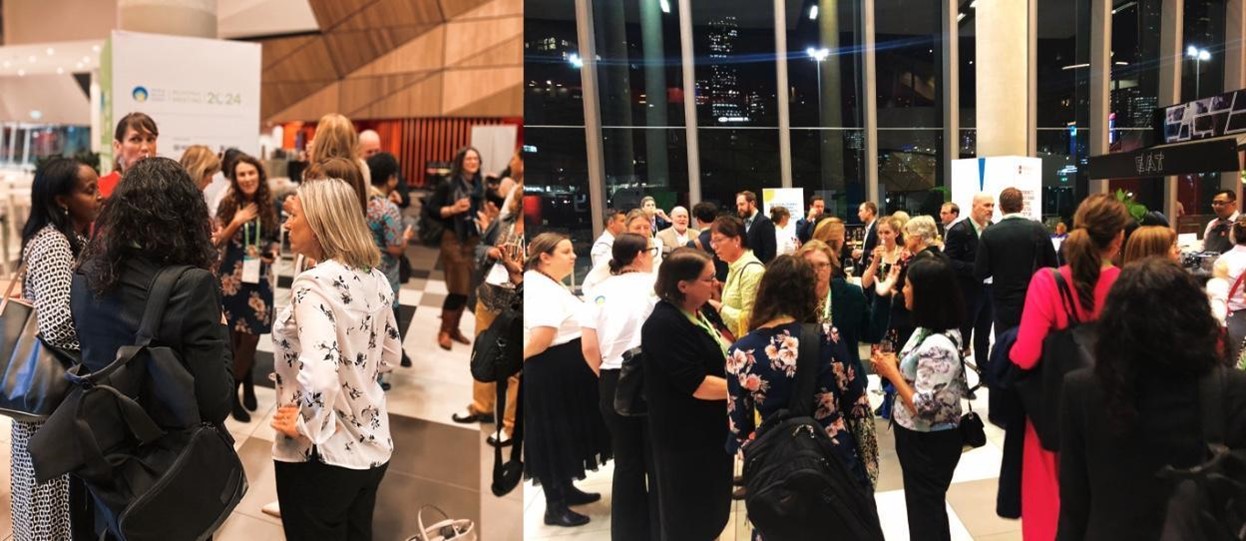
Engaging discussions following the presentations.
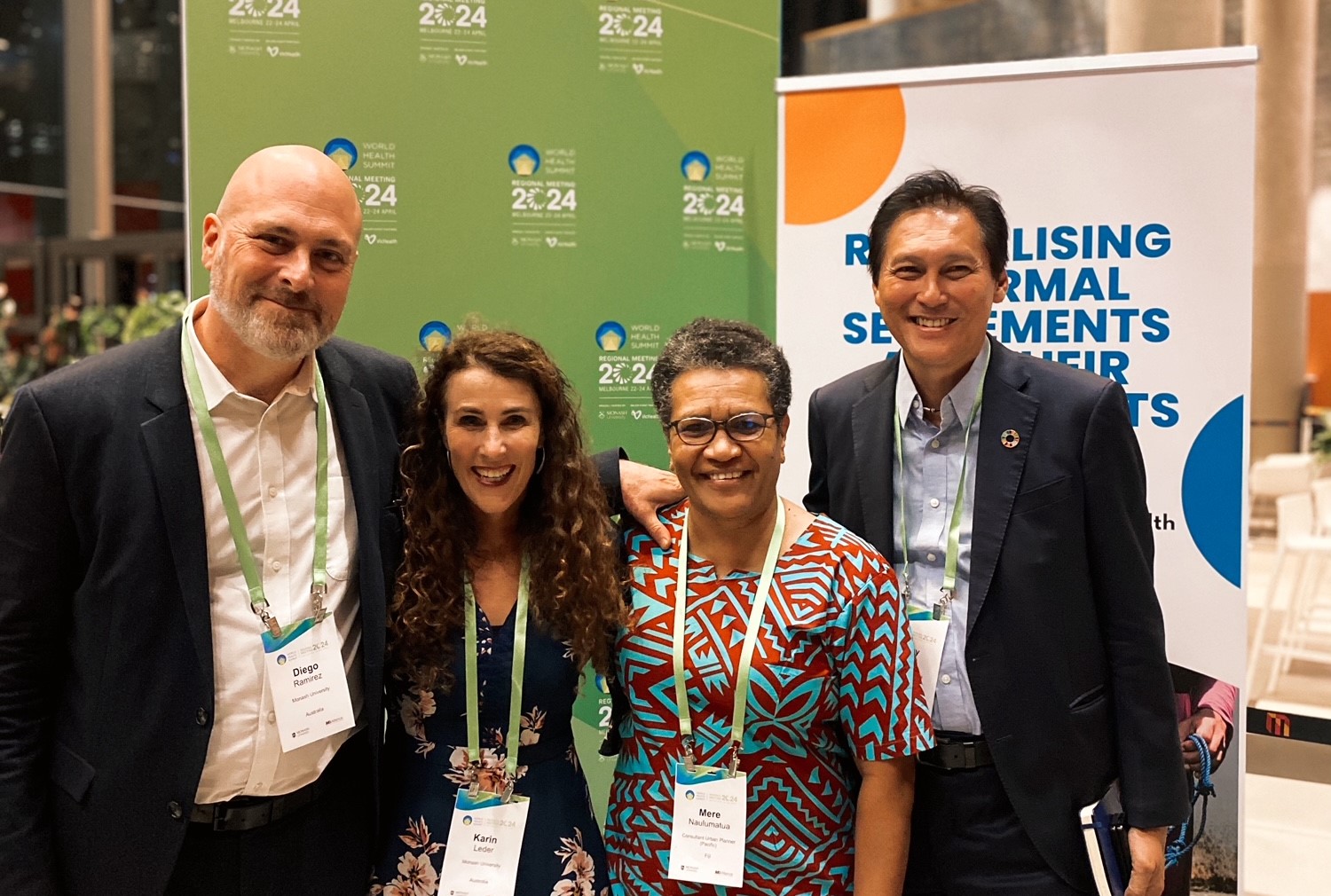
Cover Image: Left to right: Diego Ramirez-Lovering, Karin Leder, Mere Naulumatua and Tony Wong were grateful to contribute to such crucial discussions at the World Health Summit in Melbourne.
