
Wetland monitoring key to unlocking sustainable infrastructure

15 March 2024
Nature-based solutions are known to deliver sustainable, cost-effective health, and environmental improvements in high-income countries. But RISE is the first to apply this approach to urban informal settlements in low- and middle-income countries.
Constructed wetlands are a key piece of infrastructure in nature-based solutions, designed to treat wastewater naturally and efficiently. Wastewater flows through the wetlands' plants, sand and gravel, where it is treated before being discharged into the environment at higher quality.
Wetland monitoring: the first evidence
Monitoring the wetlands – including the household wastewater that flows in and treated water that flows out – is key to assessing how much the wetlands are reducing contamination in the environment.
Maghfira Saifuddaolah and Khaerul Anam, Indonesia and Alex Wilson and Taniela Waka, Fiji are leading this monitoring as part of RISE’s efforts to advocate for improved infrastructure in informal settlements.
Saifuddaolah, Co-Assessment Project Manager Indonesia and Lab Manager in Indonesia and Khaerul Anam, Lab Technician and Batua Lead are leading this wetland and water quality monitoring at the RISE demonstration site in Batua – the first informal settlement in Makassar to be upgraded in 2019. They have been gathering years' worth of data including water and mosquito samples from the wetland.
The data from Batua paints an encouraging picture, showing a marked decrease in almost all contaminants, including E. coli and chemical pollutants.
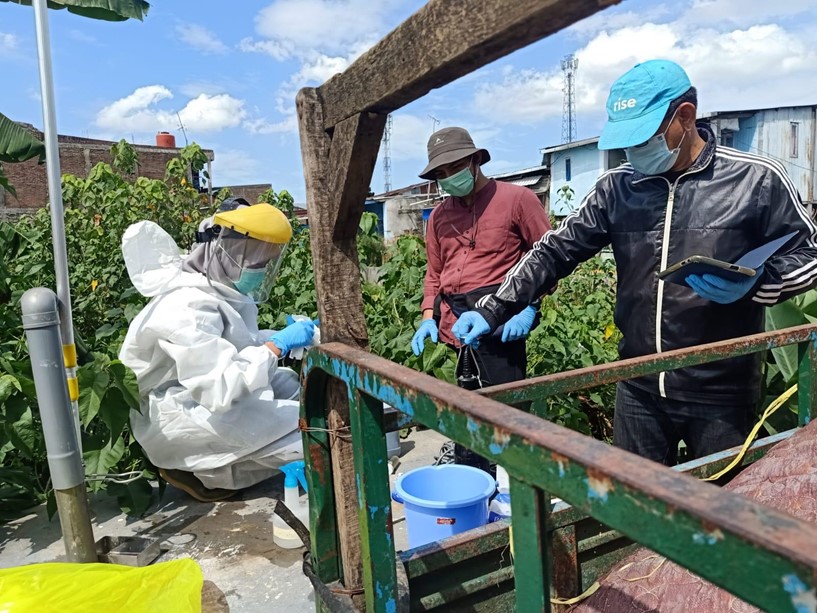 Maghfira Saifuddaolah, and colleagues Uhwan Subhan and Hamdan Habsji collect water samples at RISE Indonesia’s demonstration site.
Sharing learnings across countries
Alex Wilson, Environment Officer and Taniela Waka, Research Field and Lab Assistant, work together at the counterpart Fiji demonstration site, Tamavua-i-Wai, to coordinate the wetland monitoring activities in Suva.
Wilson emphasises the significance of evidence derived from wetland monitoring in advocating for infrastructure solutions.
"We have seen from Indonesia that the treatment of wastewater reduces harmful bacteria and chemicals back into the environment. We take these as promising early signs to advocate for nature-based infrastructure in managing Fiji's growing informal settlements in water-stressed environments."
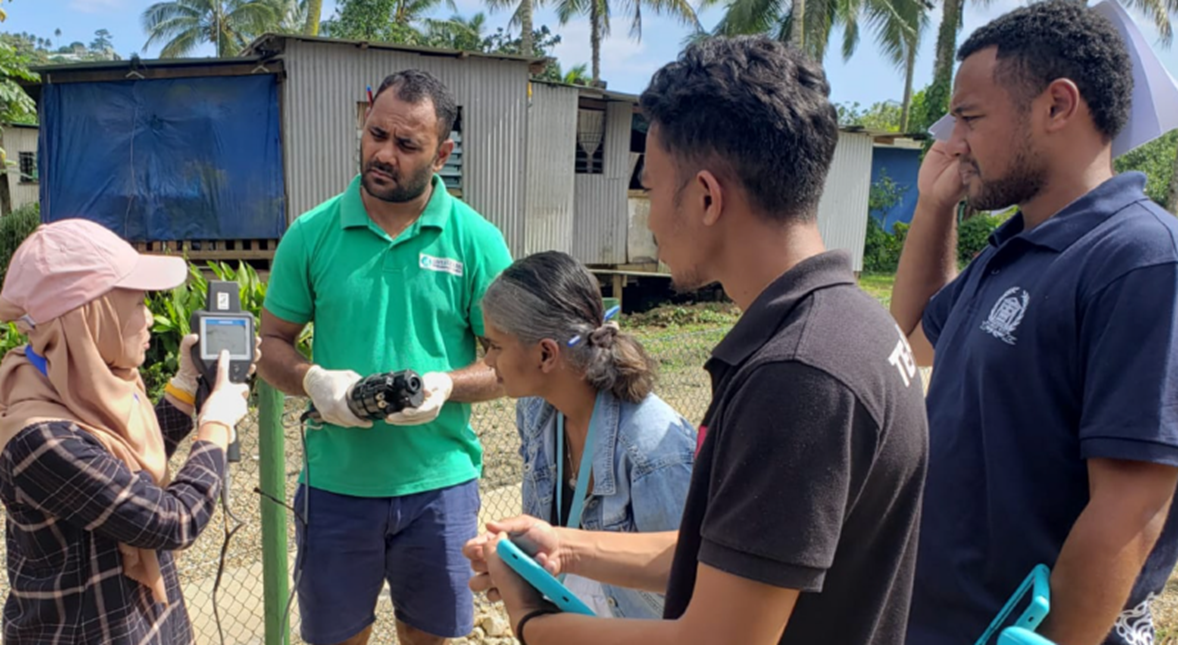
In 2022, Maghfira travelled to Fiji to provide training on collecting samples, lab analysis and data management from the field to the lab.
 This training fostered cross-country collaboration and shared insights to enhance the overall success of wetland monitoring efforts.
The collaborative exchange didn't stop at technical solutions; it also facilitated a broader understanding of environmental management practices. Proposed solutions discussed during the cross-country training became a cornerstone for Fiji's wetland rectification methodology.
The Fiji team were able to adapt and implement solutions learnt from Indonesia to address wetland pooling and blockage issues. This has led to improvements in the functioning of the wetlands and also the surrounding ecosystems.
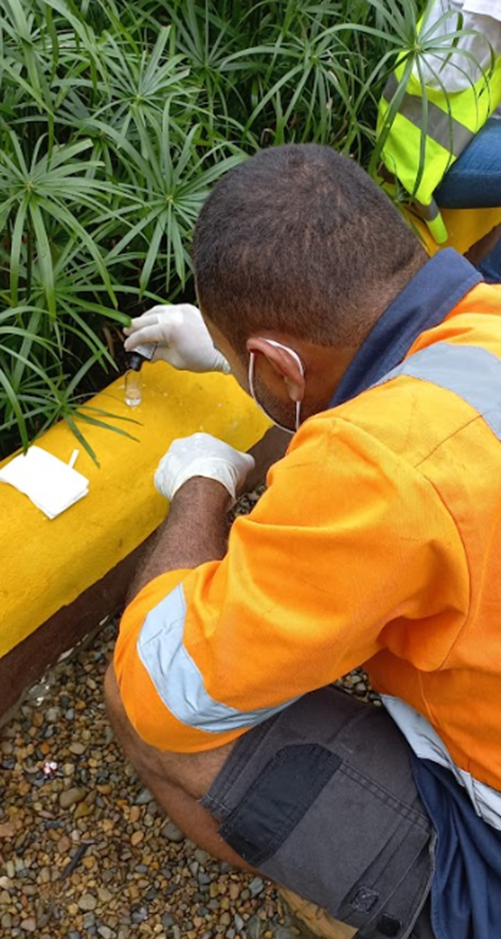
Alex Wilson collects water samples at
RISE Fiji’s demonstration site.
Using results to improve infrastructure
For the teams in Fiji and Indonesia, on-site sampling and communication with construction teams are important for infrastructure improvements. Regular water sampling and lab analysis allows for real-time observations and adjustments to rectify issues during the construction and commissioning phases.
Saifuddaolah shares instances where groundwater infiltration and suspected blockages were addressed through collaboration with the construction team, showcasing the dynamic nature of the monitoring process.
The teams have also adapted designs based on initial monitoring results. “The wetlands are one of the crucial parts of the system, and the condition of the wetlands affects the efficacy of the wastewater treatment,” Saifuddaolah says.
Going public: advocating for wetlands in urban communities
With RISE’s nature-based approach growing in recognition since 2018, the World Wide Fund For Nature (WWF) Pacific invited the Fiji team to participate in World Wetlands Day, organised by Fiji’s Ministry of Environment.
WWF Pacific’s Communications Officer Ravai Vafo'ou, said, “The Ministry of Environment and partners recognised the necessity of engaging with RISE to promote knowledge about wetlands and its relevance to both communities and the environment.
The team contributed valuable ideas to conversations about wetlands and human health, emphasising the necessity of implementing sustainable green practices in informal settlements to reduce environmental degradation and increase community wellbeing”, Vafo'ou said.
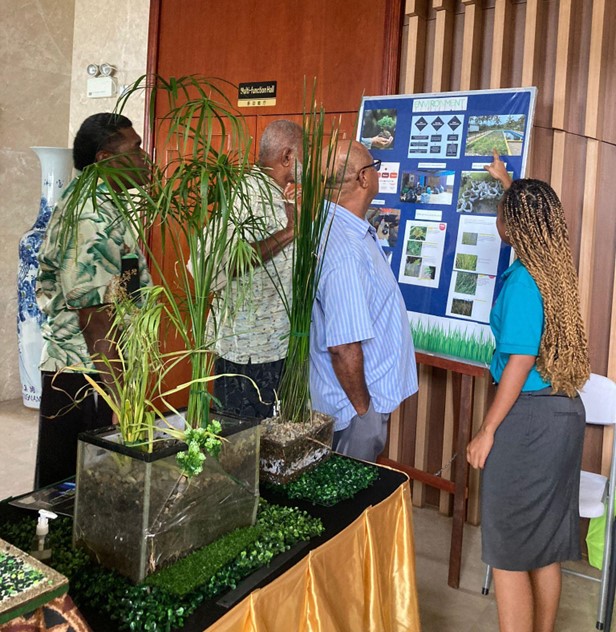
RISE'S Bulou Ratulevu from the Fiji Community Engagement team showcases
RISE initiatives at World Wetlands Day 2024.
Wetland monitoring and collaboration is not only enhancing the performance of RISE infrastructure, but also fostering shared understandings of infrastructure challenges and solutions in a novel urban informal settlement context.
As the RISE trial continues, evidence of water quality generated through wetlands monitoring serves as a powerful tool for advocating for sustainable, nature-based solutions to address water and sanitation challenges in urban informal settlements in the Asia-Pacific.
Cover image: Maghfira Saifuddaolah works with Alex Wilson and the Fiji team on wetland monitoring and training.
