Local voices key to shaping flood adaptation strategies in Pacific informal settlements
Read the paper: Pennington, H., Rogers, B., Kneebone, S., et al. 2025, Sustainability Science

Summary
By Hannah Pennington (nee Turner)
As global temperatures rise, severe weather events pose increasing risks, particularly for Pacific Islanders living in urban informal settlements. Socio-economic vulnerabilities and limited political influence exacerbate their exposure. While national adaptation strategies have made progress, they often overlook the specific needs of communities facing marginalisation. Community-led adaptation efforts are gaining attention, but these approaches remain in their early stages and are sometimes criticised for fostering paternalism, emphasising the need for external institutions to facilitate, not direct, local initiatives.
Our research investigates how vulnerable communities in the Greater Suva Urban Area of Fiji adapt to increasing flood risks. Using Photovoice, a participatory method emphasising cultural relevance and amplifying Indigenous and marginalised voices, the study involved 42 households. Through resident-led photography and semi-structured interviews, our study explores community-based flood adaptation strategies, capturing lived experiences and 31 distinct flood protection measures, including tracking water levels using environmental markers and raising homes on stilts or blocks.
Experiences of flooding shaped these measures, driven by a need to protect families and the community’s wellbeing. Health and safety concerns were paramount, with residents fearing disease from contaminated floodwaters and injury from debris. The safety of children was a particular concern, with residents expressing fear of children being swept away or injured by debris and exposed to diseases like scabies, asthma, and diarrhoea.
Although often seen through a Western lens as "coping strategies," these measures were viewed by residents as vital and effective, significantly enhancing safety by reducing exposure to floodwaters and disease. Western-centric definitions of adaptation can dismiss such local responses as ineffective, reinforcing stereotypes of inadequate adaptive capacity and hindering self-determined strategies. This underscores the importance of viewing adaptation as an evolving process and highlights the need for community-based programs that respect local knowledge and tailor solutions to community needs.
Key findings indicate that resource availability, social capital, and community leadership are critical for effective adaptation. The study advocates for adaptive processes that prioritise community leadership and flexible funding models, engaging with local insights to better support community-driven efforts and challenge paternalistic approaches.
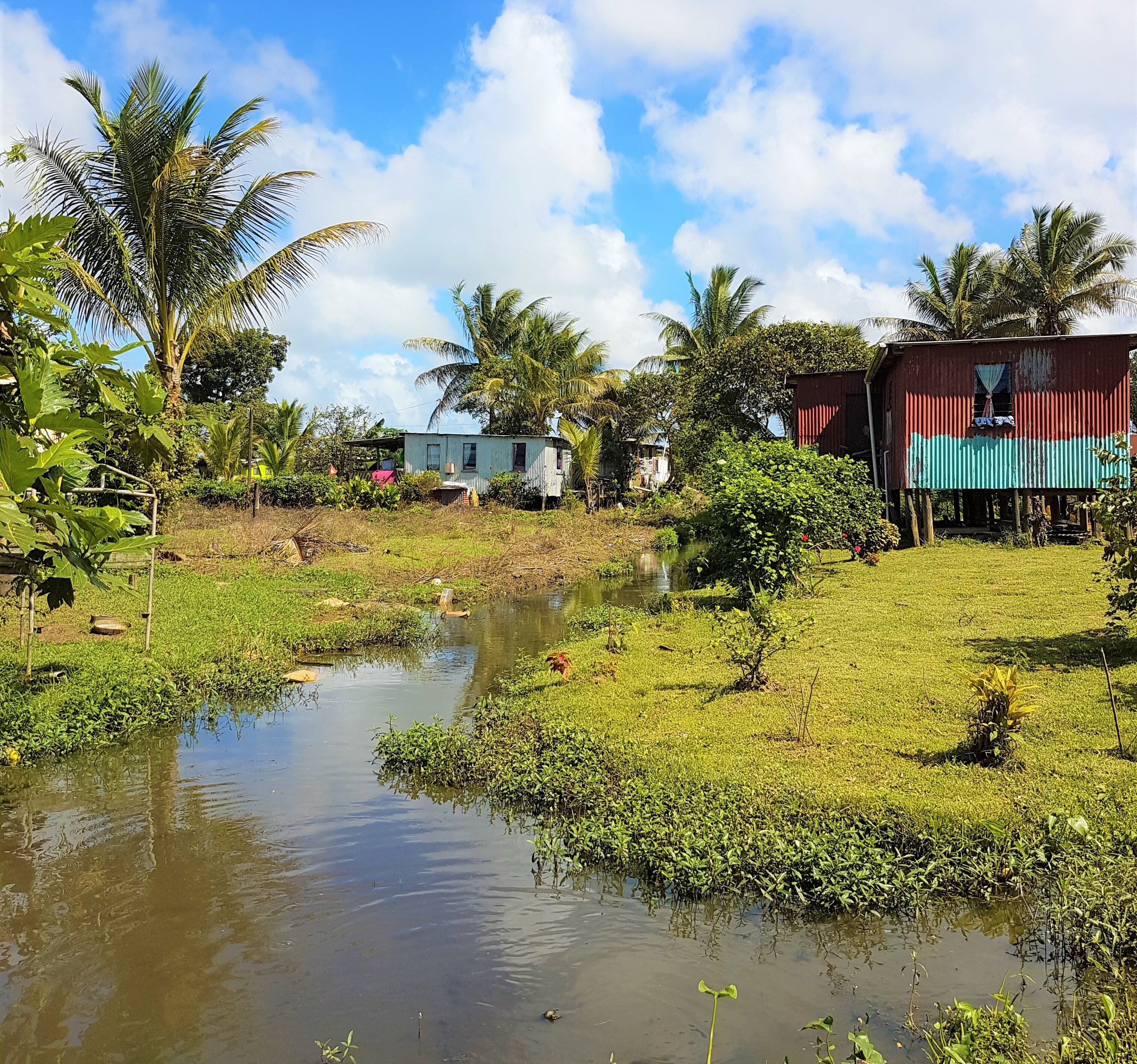
Houses on stilts in a settlement in Suva, Fiji.