
The role of garbage collection in reducing dengue risk in informal settlements
Read the paper: Rosser, J., Openshaw, J., Lin, A. et al. 2025, BMC Infectious Diseases

Summary
By Assistant Professors Joelle Rosser, Audrie Lin and John Openshaw
The growing global problem of diseases spread by the Aedes aegypti mosquito, such as dengue, chikungunya, and Zika, is becoming more serious due to urbanization and climate change. Rosser and colleagues’ research focused on how local conditions, like poor garbage collection and flooding, can impact the spread of these diseases in urban areas.
One way to measure how diseases are spreading is through acute febrile surveillance, a method which tracks reported cases of fever. However, this method often underestimates the true number of infections because it only captures cases that are reported and correctly diagnosed. This is a problem because diseases like dengue often have symptoms that are not specific, and diagnostic tests are not always available in many medical systems.
Another approach is cross-sectional serology studies, which look for antibodies to viruses in people’s blood. However, these studies only tell us about past infections and cannot detect recent ones, since antibodies fade over time.
To address these gaps, Rosser and her team used serology tests in young children, as they are more likely to show recent infections in high-risk areas. They tested children under five years-old in informal urban settlements in Makassar, Indonesia, looking for evidence of past infections with dengue, chikungunya, and Zika. By combining data on the presence of antibodies and the average age of infection, they estimated how many new cases of dengue occur each year in these areas.
Three master's students from Hasanuddin University also took part in the research, learning about arboviruses and practicing laboratory techniques like the ELISA assay, which is used to detect antibodies.
The study’s main finding is that regular garbage collection plays a crucial role in protecting young children in informal urban settlements from dengue. The study suggests that community efforts to manage garbage and flooding are key strategies for mitigating the spread of diseases like dengue, chikungunya, and Zika.
This research can help guide future efforts to develop effective interventions for preventing these diseases. It also points to the need for more research into other factors that could influence mosquito populations, such as how local flooding affects mosquito breeding, or how the materials used in housing might reduce the number of mosquitoes indoors.
Further studies are needed to better understand how these local environmental factors can be adjusted to reduce the risk of disease transmission in urban areas.
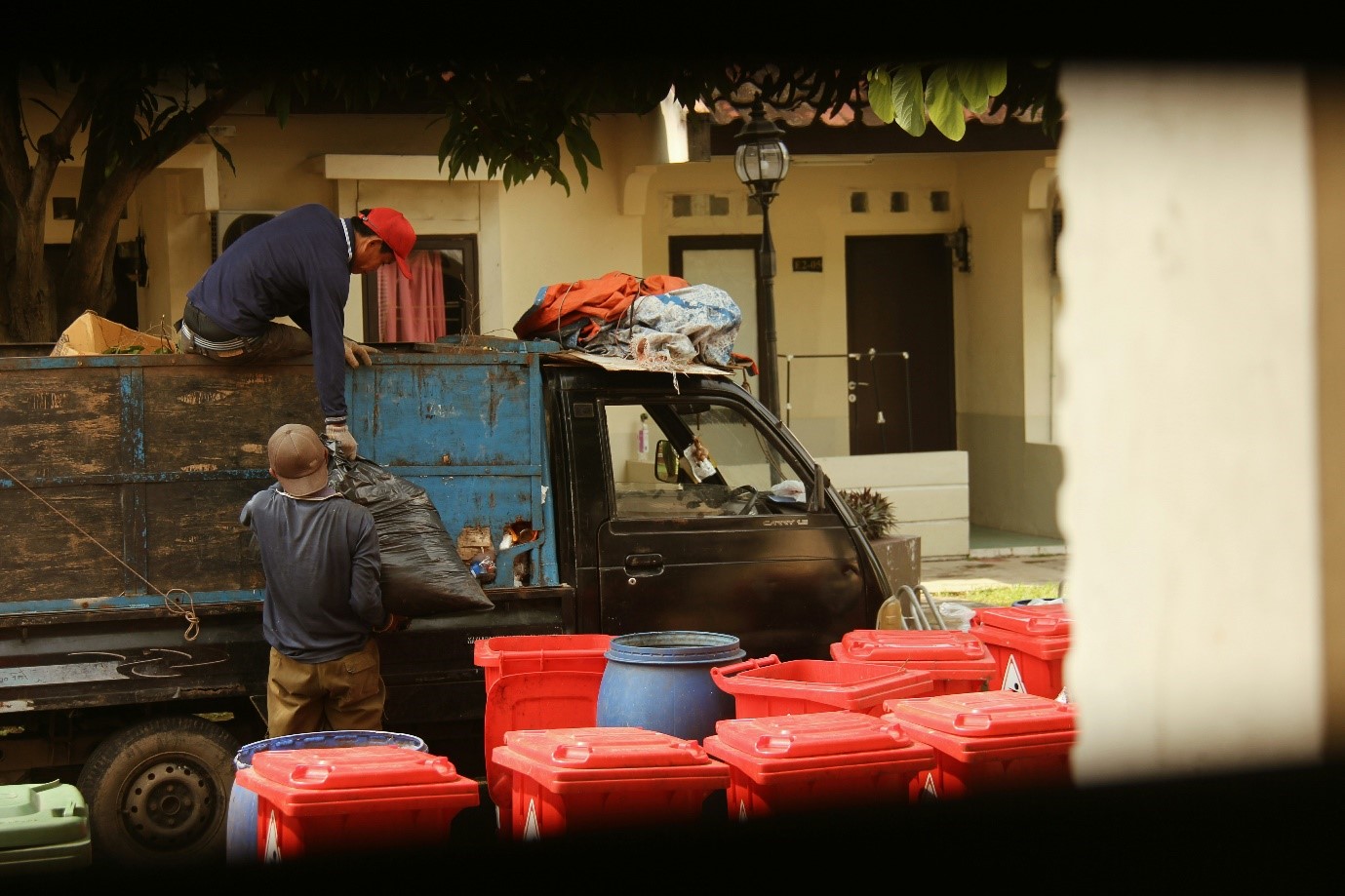
Photo: Rizkyta Putri.
