
Tools to measure resilience in informal settlements in Fiji and Indonesia
Read the paper: Oza, H., Salinger, A., Taruc, R., et al. 2025, BMC Global and Public Health

Summary
By Hemali Oza
Environmental shocks like floods and storms can damage homes, disrupt livelihoods, interrupt access to essential resources/services, and impact human health. Especially for residents of the urban informal settlements in Suva, Fiji and Makassar, Indonesia where RISE works, building resilience—or the ability to cope with, adapt to, and recover from disruptions—is key to more efficient and timely recovery and protecting human health.
RISE adopts a water-sensitive approach to site-specific water and sanitation infrastructure, aiming to reduce flooding hazards and fecal contamination and improve human health. While not explicitly designed to improve household resilience, the participatory design approach used in RISE has the potential to affect resilience through changes in social capital, and infrastructural interventions can affect resilience through water supply diversification and flood management.
Resilience is a “latent” concept—something that can’t be directly seen or measured—so it requires specialized tools. However, survey tools to measure household resilience in settings such as the RISE settlements did not exist. We set out to develop and test new measurement tools, known as “scales,” to assess household resilience to environmental shocks like floods, natural disasters, and storms. We designed survey questions, rolled them out among 882 households in the RISE settlements in Suva and Makassar, and used advanced statistical methods to test whether they measured household resilience in a reliable and valid way.
Our survey tools focused on three types of household resilience: economic, environmental, and social. The economic and social resilience scales performed well—they were reliable, meaningful, and able to distinguish between households with higher and lower resilience. They were also valid, meaning they accurately measure what they were intended to measure. Economic resilience included questions about financial stability, while social resilience included topics like inclusion, trust, collective action, and preparedness. The environmental resilience scale did not perform as well in our psychometric assessment and is undergoing further refinement.
These new tools can be used by others and can help governments, aid organizations, and researchers assess the impact of programs designed to improve resilience to the extreme weather events that are increasingly common in our changing climate.

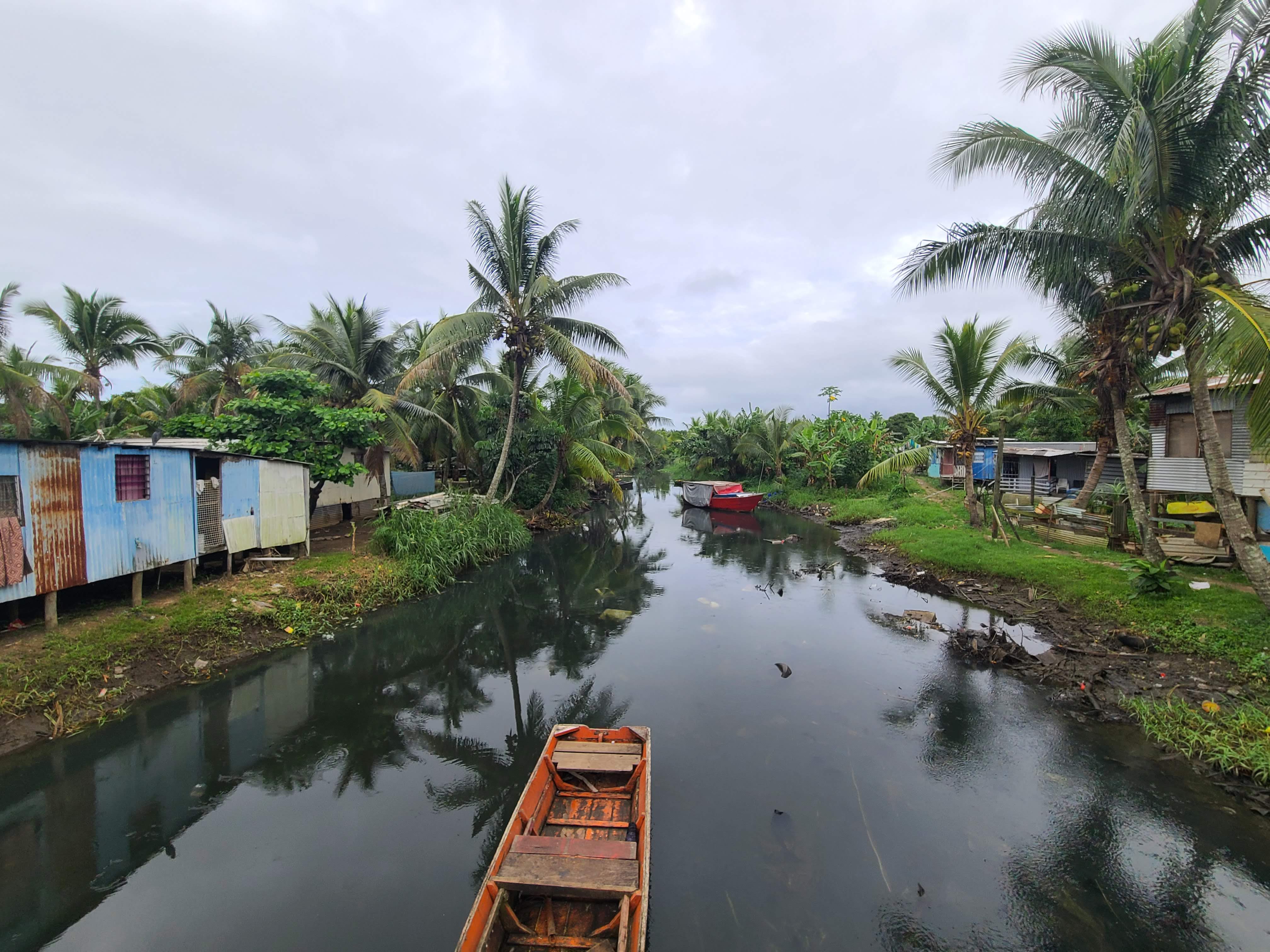
An informal settlement in Suva, Fiji.
