
‘When it floods, we work on our own’: Exploring factors influencing collective efficacy appraisals for community-level flood measures among urban informal settlements in Suva, Fiji
Read the paper: Salinger, A., D'Eramo, T., Turner, H., et al. 2024, Journal of Community and Applied Social Psychology

Summary
By Allison Salinger
Collective efficacy is defined as a group's shared belief in its ability to organize, identify goals or shared interests, develop strategies, and carry out action in pursuit of those common goals. Communities and individuals with higher perceived collective efficacy have been found to fare better following natural disasters, including floods, and be better prepared for such events before they occur.
Our study explored what factors were influencing perceptions of collective efficacy among RISE residents of urban informal settlements in Suva, Fiji. Specifically, we wanted to understand what influenced residents' ideas about their settlement's ability to implement community-level flood protection, prevention, and response measures.
Our analysis revealed five key influences on residents' perceived collective efficacy:
- Formal leadership
- Shared needs or benefits
- Collective identity (e.g. shared religion, ethnicity or regional/kinship group)
- Past performance experiences (i.e., whether attempts at collective flood measures had failed or succeeded in the past), and
- Expectations around collective action, particularly around which tasks or goals warrant collective action and who is expected to participate.
Development programs that require community-level collaboration and that fail to account for community social dynamics, such as perceived collective efficacy, have shown poor outcomes—a reality that program participants living with the threat of sea level rise and increased flooding damages can hardly afford.
It is important to understand whether participants believe that program objectives reflect shared needs and whether those objectives warrant collective action according to the community's social expectations.
Where this is not the case, and/or where collective efficacy is weak, implementers may consider incorporating intervention techniques to strengthen collective efficacy, linking program objectives with other public goods for which communities are willing to collaborate, or selecting alternative intervention techniques that do not require collective action.
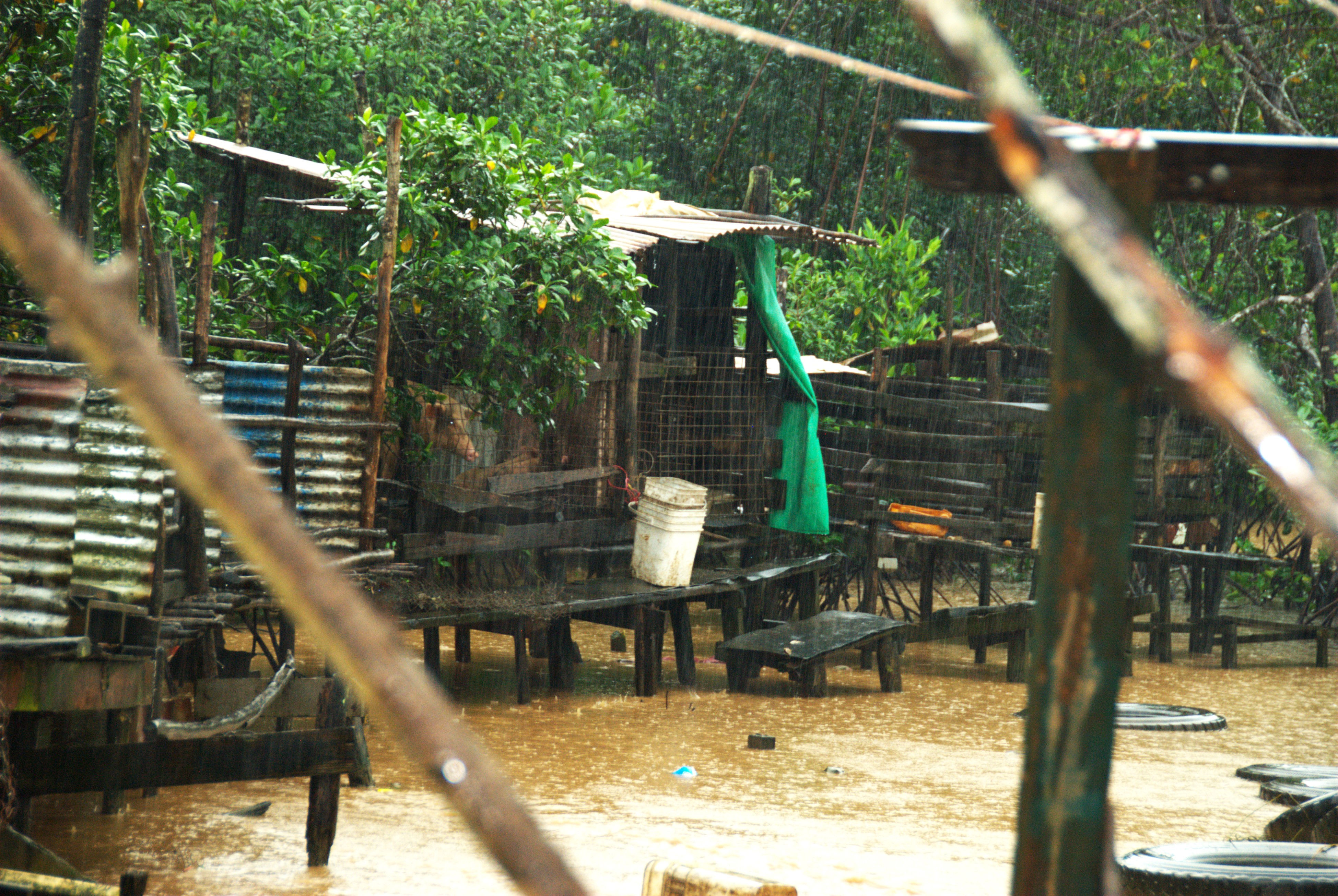
Rain and floodwaters at a RISE informal settlement in Suva, Fiji.
