
Who participates in ‘participatory design’ of WASH infrastructure?
Read the paper: Mink, T., Salinger, P., Francis, N., et al. 2025, PLOS Global Public Health

Summary
By Thea Mink
‘Participatory approaches’ are increasingly used to tailor interventions to communities’ landscapes and preferences. These methods can enhance intervention ownership and management. When diverse groups of people are intentionally included in water and sanitation programming, their specific needs are more likely to be addressed.
However, evaluations of participatory approaches among diverse groups are uncommon, especially for designing water and sanitation interventions.
We conducted a process evaluation of the RISE participatory design phase to assess both participation and participants’ satisfaction, with a focus on gender and social inclusion. Such process evaluations can help determine if interventions are implemented as intended and for guiding future steps.
We found that RISE participatory design activities achieved good overall participation and participant satisfaction. In Makassar and Suva, most respondents participated in at least one participatory design activity and the majority were satisfied with their level of influence over RISE decision-making. However, we also identified notable gender and social inequities. In Makassar and Suva, we observed that certain groups were more likely to participate in the design activities. And in Suva, satisfaction was more likely to vary by gender, religion, and marital status.
These findings encourage future participatory design processes to develop meaningful engagement with communities and local organizations to better involve people of interest. Our process evaluation also provides an example of how programs that aim for an inclusive participatory approach can evaluate their success in engaging diverse community members.

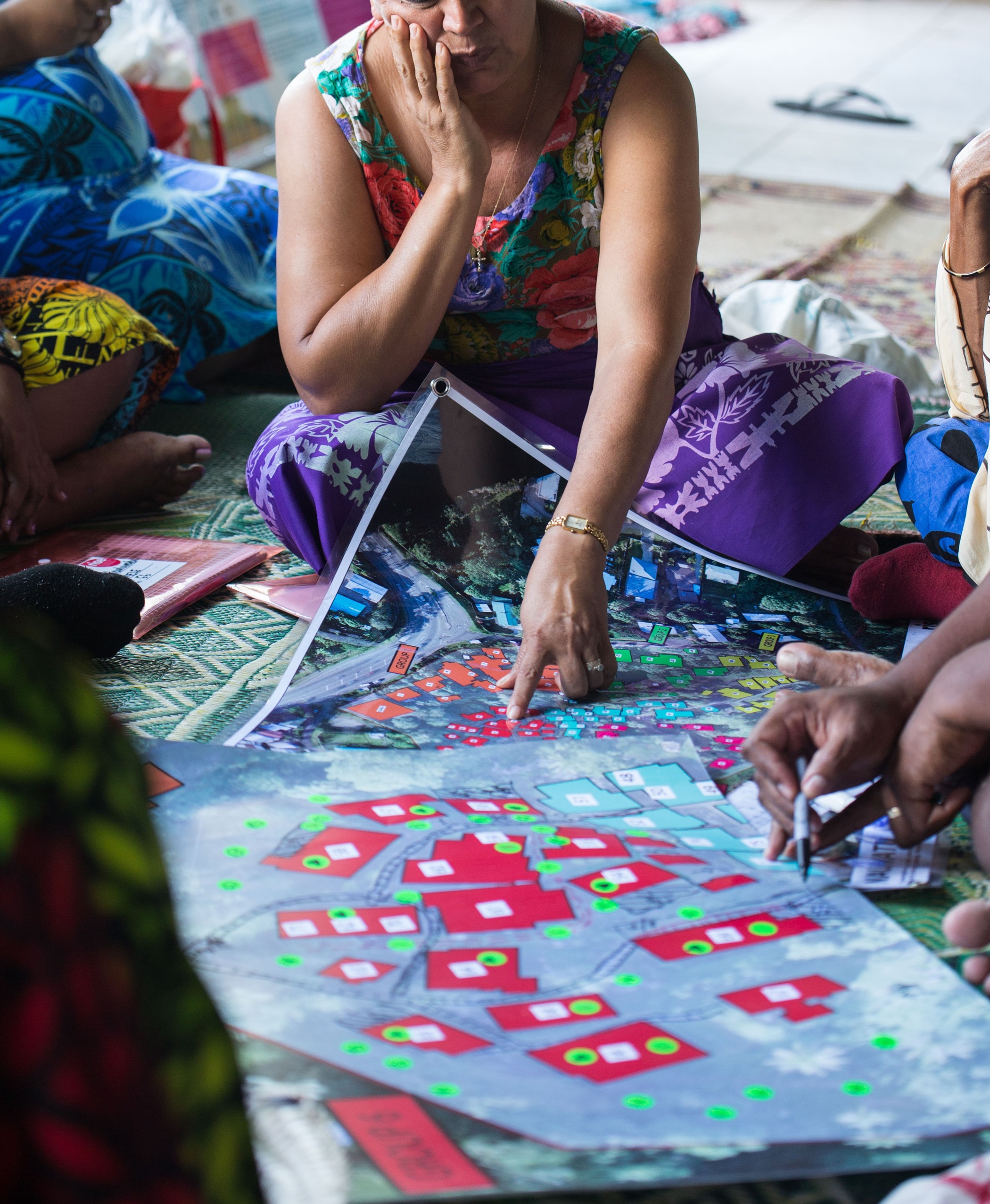
Residents take part in a RISE co-design session in Suva, Fiji.
