
Fiji Inter-Agency Taskforce on Informal Settlements endorsed the RISE Working Group (RWG) Work Plan
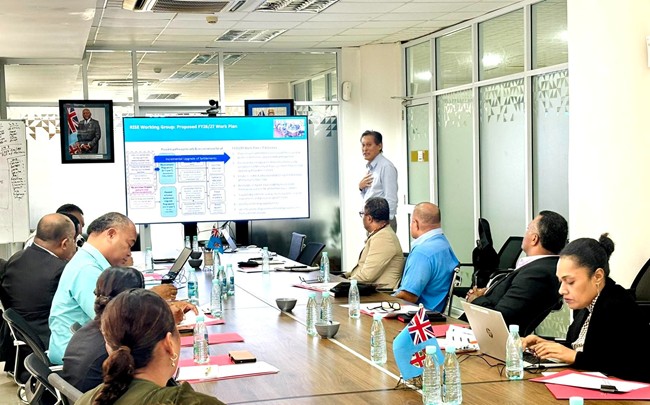
15 July 2026
By Tony Wong
The Fiji Inter-Agency Taskforce on Informal Settlements has formally endorsed the RISE Working Group (RWG) Work Plan for FY2026/27, marking a significant milestone in Fiji's commitment to delivering coordinated, climate-resilient upgrades for informal and other difficult-to-service settlements.
The RWG Work Plan, endorsed in May 2026, provides a practical roadmap for government agencies to work collaboratively to improve environmental quality, public health and community resilience through evidence-based planning, integrated water management and nature-based solutions.
Building on the success of the RISE Program, the Work Plan promotes an incremental settlement upgrading approach that complements the Ministry of Housing's Informal Settlement Upgrading Programme (ISUP). Rather than waiting for full redevelopment, the strategy focuses on delivering practical improvements in water supply, sanitation, drainage and green infrastructure that enhance living conditions for at risk communities while laying the foundation for long-term settlement transformation.
The Work Plan for FY2026/27 involves seven activities:
1. Map relevant settlements and activities across government
The RWG will develop a comprehensive inventory of settlements and ongoing initiatives across the respective portfolios of member ministries and agencies. Mapping existing programs and identifying priority communities will improve coordination, minimise duplication, and establish a shared evidence base for planning future investments and collaborative interventions.
2. Facilitate the introduction of an Incremental Upgrade component in the Ministry of Housing Informal Settlement Upgrading Programme (ISUP)
The RWG will provide technical support to the Ministry of Housing in actively pursuing a policy reform to formally incorporate an Incremental Upgrade component into ISUP, complementing its existing redevelopment and formalisation programme. The policy reform will establish the institutional setting for an evidence-based, whole-of-government approach to settlement upgrading, allowing practical, staged interventions to improve threshold living conditions for a greater number of at risk communities.
3. Establish and test a Foundational Geospatial Database of Informal Settlements (GDIS)
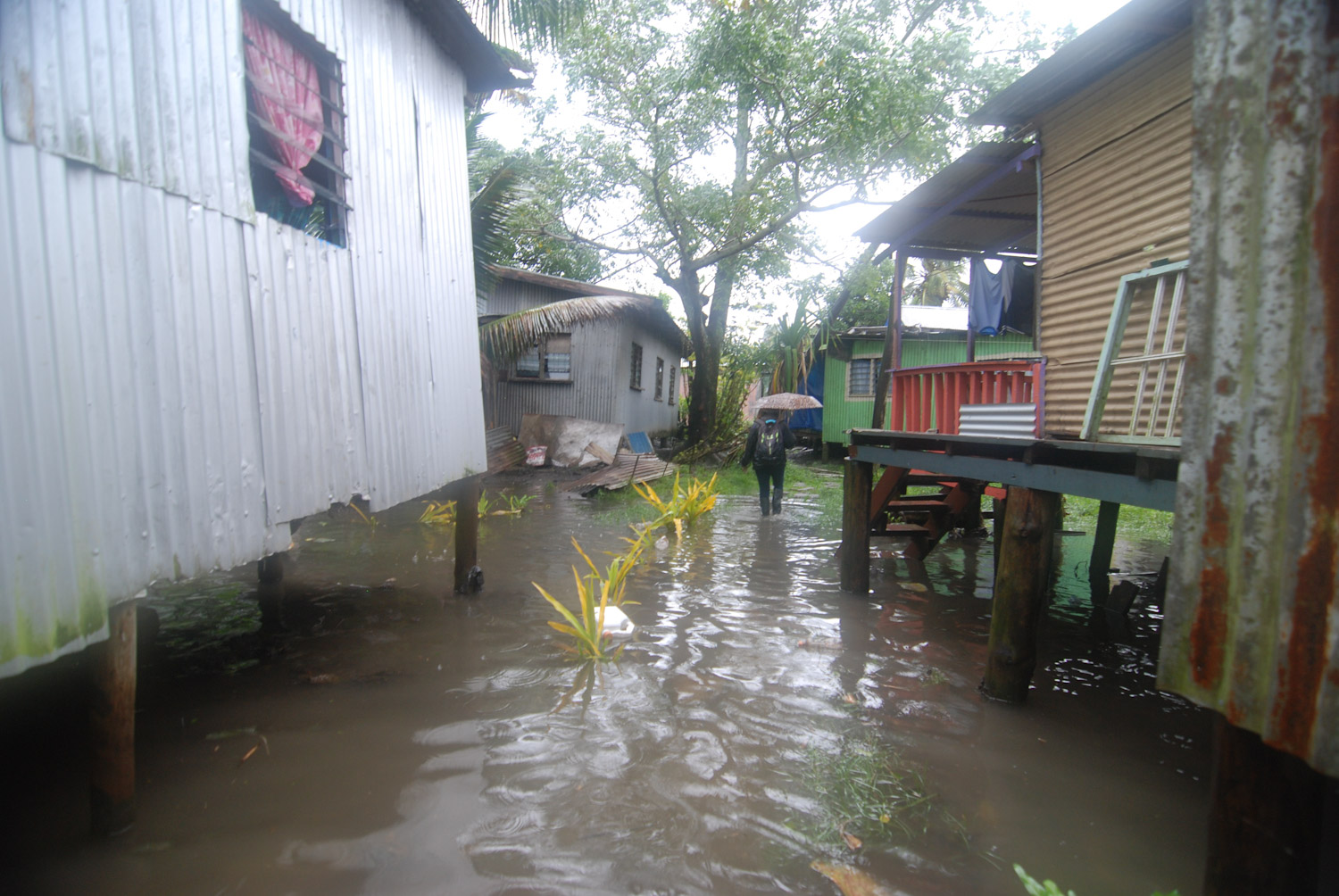
Above: Flooding in an informal settlement in Suva.
The RWG will establish and pilot a nationally consistent Geospatial Database of Informal Settlements (GDIS) in partnership with the Ministry of Housing and the Ministry of Lands. This activity could form part of a larger more comprehensive ARC Linkage Grant application involving other ministries and agencies of the taskforce.
The database will hold three tiers of information: Tier 1 will capture core spatial attributes including settlement location, municipal jurisdiction, boundaries, extent, context and proximity to key environmental features. Tier 2 will incorporate morphological and physical indicators including population and dwelling densities, building footprint patterns, terrain slope, flood exposure and accessibility. Tier 3 will add socio-ecological and service-related information including environmental exposures, water and sanitation services, public health risks, flooding and heat vulnerability, together with qualitative indicators such as social cohesion and community resilience. Collectively, the GDIS will provide the evidence base for coordinated planning, vulnerability assessment and prioritisation of settlement upgrades.
4. Formulate and pilot a Vulnerability Assessment Framework suitable for all member organisations
The RWG, in collaboration with UNHabitat, will develop and pilot a nationally consistent Vulnerability Assessment Framework that combines geospatial, environmental, infrastructure and socio-economic indicators to identify and prioritise settlements most vulnerable to climate change, inadequate services and public health risks. Building on the GDIS, the framework will provide a common evidence base for government investment decisions. This activity together with the GDIS of Activity 3 could form part of a larger ARC Linkage Grant.
5. Support departments and agencies in preliminary site assessments and project scope definition
The RWG will provide technical support to member ministerial departments and agencies in undertaking preliminary rapid site assessments to help define integrated project scopes for priority settlements. This activity models and builds on work already completed or currently being undertaken by the RISE Team, including site analyses for Navuniivi Village with the Ministry of Housing, Khalsa Road Settlement with the iTaukei Land Trust Board (TLTB), and twenty rural villages under a World Bank-supported project with the Ministry of Rural and Maritime Development. These assessments demonstrate how place-based integrated evaluations of water supply, sanitation, drainage, flooding and community infrastructure can be developed.
6. Identify inter-agency co-funding opportunities
The RWG will identify opportunities for ministries and agencies to co-fund projects that deliver shared outcomes across water, sanitation, housing, environmental management and climate adaptation, improving efficiency and supporting integrated delivery.
7. Identify whole-of-government funding opportunities from external sources
The RWG will coordinate the development of multi-agency investment proposals to secure funding from international development partners and climate finance institutions, strengthening Fiji's ability to attract long-term investment for climate-resilient settlement upgrading.
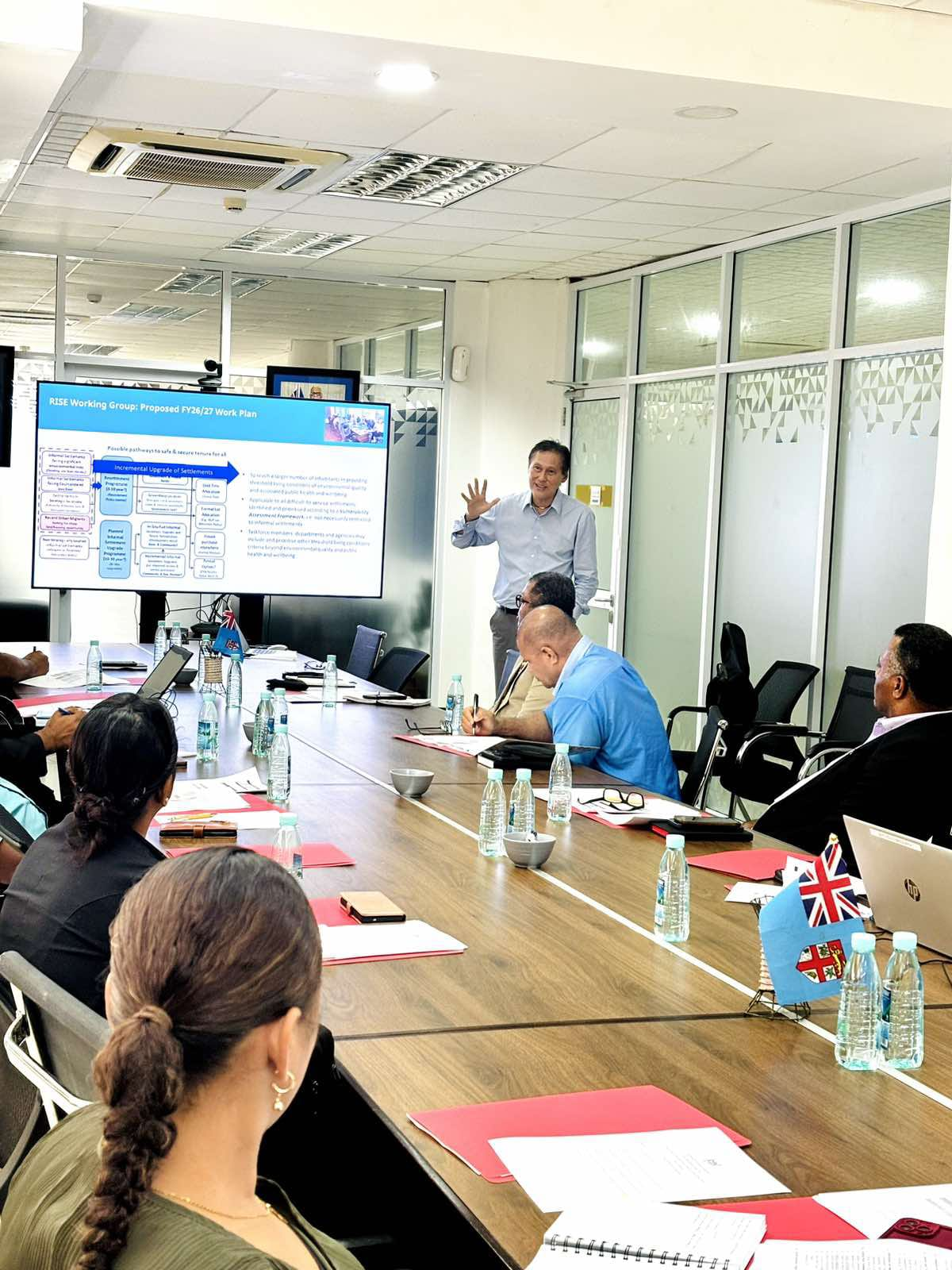
Above: Tony Wong, Director of Upscaling, RISE, outlines activities within the RWG Work Plan to the Fiji Inter-Agency Taskforce on Informal Settlements .
The endorsement of the FY2026/27 Work Plan reinforces the RWG’s role as the technical and collaborative arm of the Fiji Inter-Agency Taskforce on Informal Settlements.
By bringing together expertise from across government, academia and development partners, the RWG will facilitate knowledge sharing, coordinated planning and evidence-based decision-making while translating the lessons and innovations of the RISE Program into national policy and practice. Through this whole-of-government approach, Fiji is well positioned to scale water sensitive and nature-based solutions, improve the health and wellbeing of at-risk communities, strengthen climate resilience, and mobilise long-term international investment to transform informal and other difficult-to-service settlements across the country.
