
Inaugural RISE Working Group meeting marks a turning point for informal settlement upgrading in Fiji
27 November 2025
The Fijian government's commitment to improving the lives of residents in informal settlements has taken a further significant step forward with the inaugural meeting of the RISE Working Group (RWG) on October 14, 2025. This new technical body, operating under the national Inter-Agency Taskforce on Informal Settlements, is set to champion a new approach to urban development, focusing on incremental upgrades to deliver faster and more widespread improvements in health, environment, and climate resilience to Fiji’s most vulnerable communities, those living in Fiji’s informal settlements.
This initiative has laid the foundation for the next phase of the RISE Program’s research-to-impact pathway - linking research and innovation with community co-design and field implementation, monitoring and evaluation, and now institutional and policy reform.

Ms Teopola Kulavati, Director of the Ministry of Housing and Chair of the RWG says: “The RWG will leverage the lessons from the successful Revitalising Informal Settlements and their Environments (RISE) program, which has demonstrated a transformative, nature-based model for upgrading informal settlements.”
The Challenge: A Growing Urban Crisis
Fiji is home to over 250 informal settlements, with a combined population of approximately 77,000 people. The majority of these settlements are in the rapidly growing urban areas of Suva, Nadi, and Lautoka. Residents often face insecure land tenure, inadequate housing, and a lack of basic services. These conditions are exacerbated by the increasing impacts of climate change, such as flooding and sea-level rise, which worsen sanitation problems and lead to the spread of waterborne diseases.
Recognising the scale of this challenge, the Fijian government established the Inter-Agency Taskforce on Informal Settlements in January 2025. A catalyst for the establishment of the Taskforce was the RISE National Symposium on 23rd October 2024, bringing together delegates from departments and agencies from multiple ministries, highlighting the multiple benefits across the various portfolios of stakeholder ministries and the importance of a coordinated approach in upgrading informal settlements. The Taskforce brings together eleven government ministries in a whole-of-government effort to create coordinated and effective strategies for addressing the plight of informal settlement inhabitants.
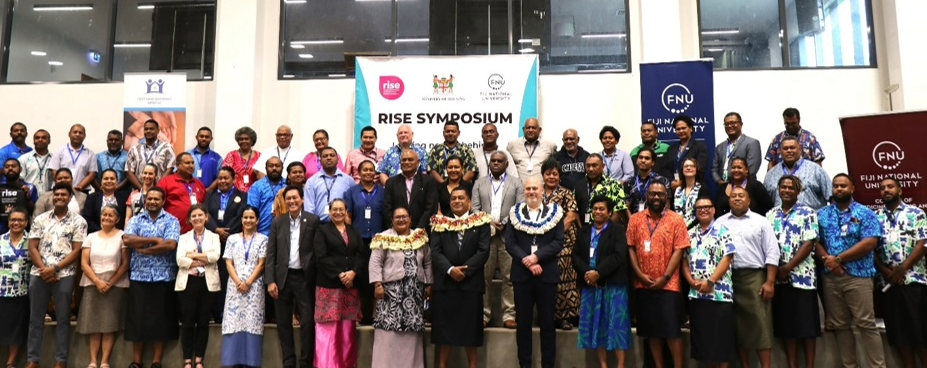
(Above): RISE National Symposium delegates, Fiji, 2024
A New Way Forward: Incremental Upgrading and the RISE Model
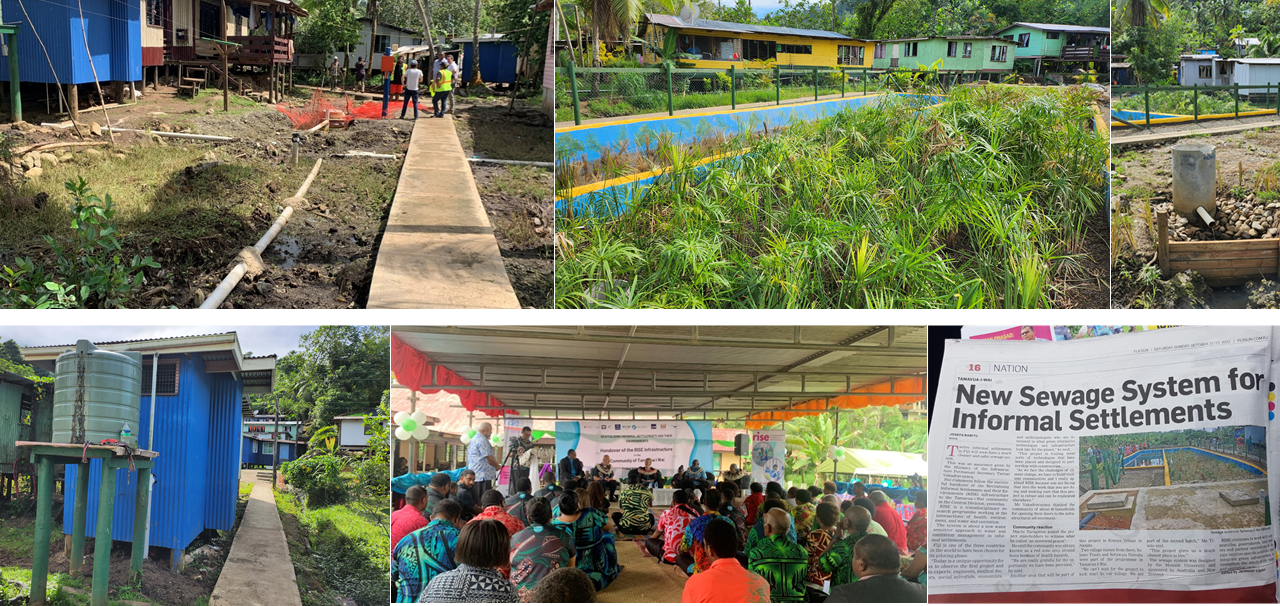
The RISE program has provided a powerful proof-of-concept for a new approach. By implementing water-sensitive solutions in seven informal settlements to concurrently address poor sanitation, frequent contaminated flood inundation and poor drainage in the Greater Suva area, the program has shown a practical approach to concurrently address environmental quality and associated public health concerns. The core of the RISE model is its focus on interrupting the pathways of faecal contamination through improved sanitation and drainage, which directly tackles the root causes of many health issues, including diarrhoeal diseases, which are a major cause of child mortality and stunting.
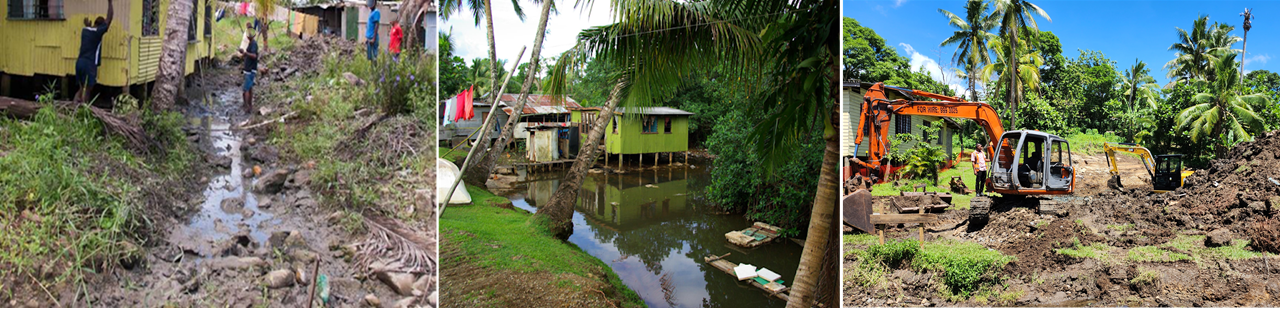
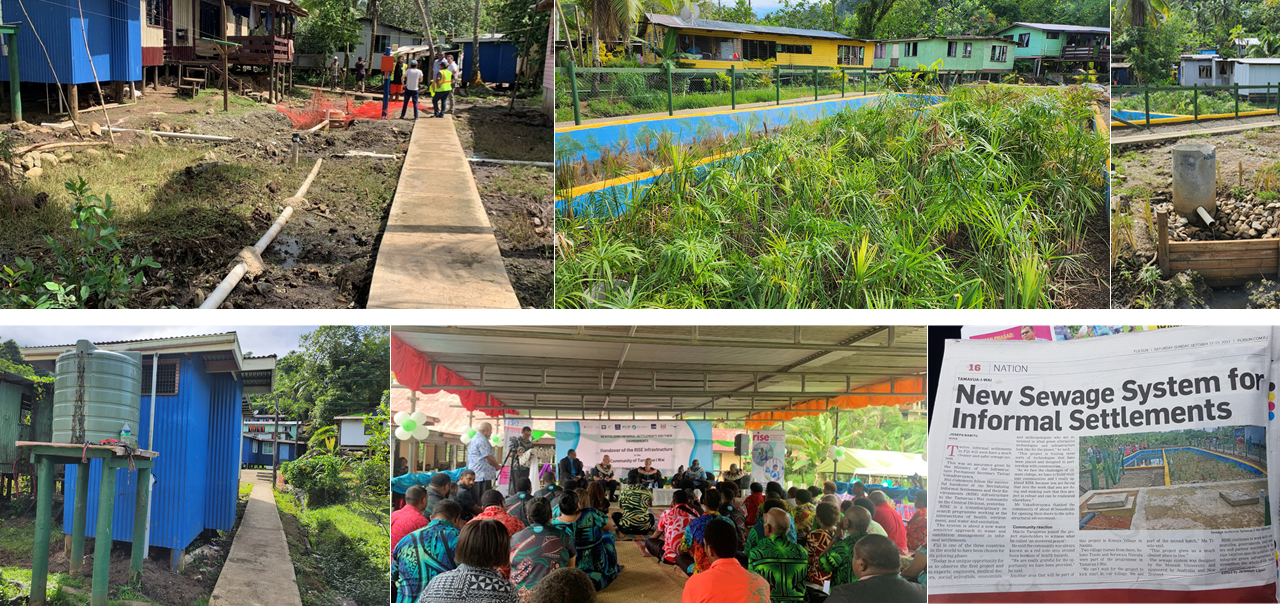
The RWG will now work to integrate this successful model into national policy. The concept of incremental upgrading is central to this new strategy. The working group's establishment signals a pivotal shift from traditional, slow-paced full revitalisation projects to a more agile, incremental strategy. This approach prioritises the delivery of essential services like clean water, sanitation, and drainage to a larger number of communities, addressing urgent health vulnerabilities while paving the way for future, more comprehensive upgrades.
Professor Diego Ramirez-Lovering, co-Director of the RISE Program reflects on the strategic impact of the incremental upgrading approach: “Instead of waiting for the resources and time required for full-scale revitalisation, the incremental approach focuses on delivering essential services in phases, ensuring more communities receive the foundational infrastructure needed for better health and well-being in a shorter timeframe.”
A Coordinated, Whole-of-Government Effort
The significance of the Inter-Agency Taskforce and the new RWG lies in their ability to coordinate a multi-sectoral response. The challenges of informal settlements are complex and interconnected, and they cannot be solved by any single ministry acting alone. The work of the RWG will have benefits across a wide range of government portfolios as outlined below. This collaborative approach ensures that investments are aligned, expertise is shared, and solutions are holistic and sustainable.
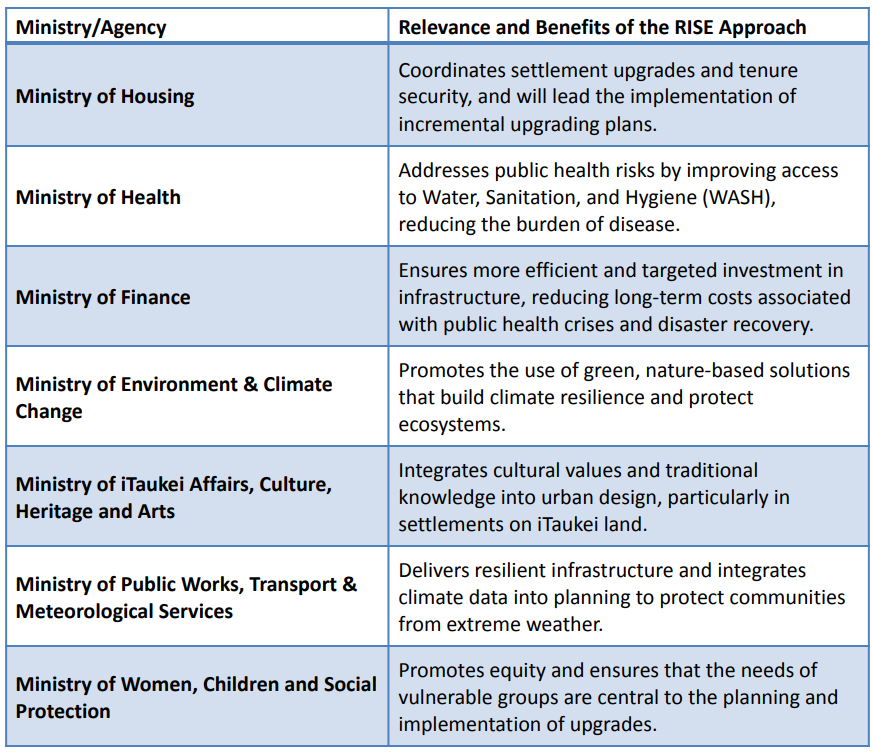
Manasa Lesuma, Permanent Secretary of the Ministry of Housing and Chair of the Taskforce reflects on the significance of the Taskforce and the role of the RWG: “The RISE program demonstrates that when we prioritise health and wellbeing, environmental quality, and climate resilience together, we can create sustainable pathways for communities to thrive. The RWG will enable us to scale these solutions across Fiji, ensuring that more families have access to the essential services that are foundational to dignity, health, and opportunity."
The Path Ahead
The inaugural meeting of the RWG marks the formal start of its work. The group, chaired by the Director of the Ministry of Housing, will now focus on developing agency-specific work plans that incorporate the RISE approach and identifying priority areas for collaboration. The ultimate goal is to create a national roadmap for the incremental upgrading of informal settlements across Fiji.
By harnessing the lessons of the RISE program and fostering a new era of inter-agency collaboration, the Fijian government is taking a decisive step towards creating healthier, more resilient, and more inclusive communities for all.
The RISE Fiji team is providing secretariat support to the RWG and coordinates its efforts in embedding lessons and insights from the RISE Program into the respective programs and policies of respective member organisations. Isoa Vakarewa, country manager of the RISE Program in Fiji said "The skills and knowledge our in-country team has gained through RISE are now directly strengthening the RWG's capacity to drive meaningful, community-led change across Fiji's informal settlements."
Professor Tony Wong, Director of Scale-up of the RISE Program, will lead the technical team supporting the RWG and emphasised the transformative potential of this collaborative approach: "The RISE Working Group represents a critical evolution in how we address informal settlement challenges in Fiji. By bringing together multiple ministries under a unified framework, we can ensure that water-sensitive, nature-based solutions are not isolated interventions, but rather integrated components of a comprehensive national strategy.”
______________________________________________________________________________
For further information, please contact:
Mr Isoa Vakarewa, Country Manager, RISE Fiji
Secretariat of the RISE Working Group
