
RISE collaborates with Fiji health authorities on de-worming treatment for children
25 February 2025

Early this year, RISE completed a mass drug rollout to help treat parasitic worm infections in children in informal settlements in Suva, Fiji.
The rollout, which took place over December 2024 and January 2025, saw community fieldworkers visit households across RISE’s 12 partner communities, administering albendazole to children and families. Albendazole is a medication used to treat a variety of parasitic worm infections, such as hookworm and Ascaris lumbricoides, which are present in soil environments and can be detected in stool samples.
Among a range of human health indicators, RISE has been analysing faecal samples in Suva’s informal settlements, having collected nearly 2,000 samples from children under the age of five over the past six years. The primary purpose of the data is to monitor changes in community health as a result of RISE’s newly built water and sanitation infrastructure. But sharing infection rates uncovered in the course of this research has provided the opportunity to collaborate with Fiji’s health authorities to provide an immediate public health intervention.
Collaboration began in 2024 when RISE shared data with Fiji’s Ministry of Health and Medical Services showing high rates of detected soil-transmitted helminth (STH) cases within the RISE settlements. With the Ministry of Health’s endorsement, RISE began working with the Fiji Centre for Disease Control (CDC), who liaised with the WHO to secure albendazole for distribution in accordance with WHO guidelines.
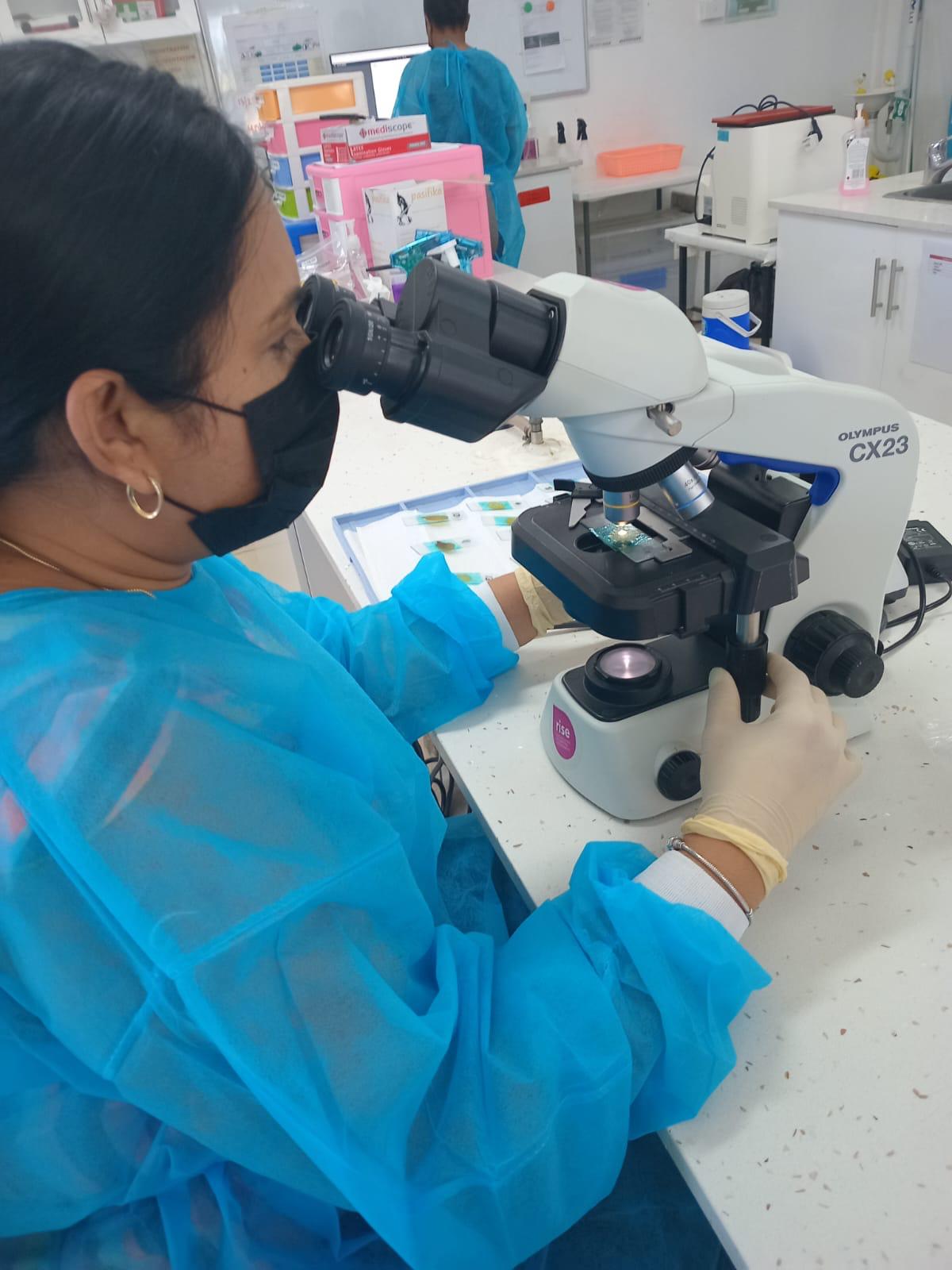
Laboratory Quality and Control Lead Reema Kumar views stool samples.
The recent mass drug rollout successfully reached 87 percent of eligible residents across 12 informal settlements. Research Field and Laboratory Assistant Taniela Waka has seen first-hand how the trust that RISE’s research field team has built with communities over years enabled the successful campaign.
“[Residents’] receptiveness was evident in the high coverage rates we achieved,” Waka said. “This success would not have been possible without the support from the Ministry of Health, particularly the Fiji CDC, who provided us with comprehensive training, essential albendazole tablets, and the invaluable support from our team’s research manager.”
A summary report reveals that families welcomed the de-worming treatment. Door-to-door visits and distribution made access to treatment more convenient for families, some of whom noted that obtaining the drug from health centres can be difficult. The household campaign also raised awareness of parasitic diseases, with some community members stating their intentions to reinforce the messaging in upcoming church sermons.
RISE Assessment Project Manager and Chief Investigator Autiko Tela, who led the campaign, agreed it was an opportunity to empower residents with knowledge and treatment opportunities.
“By building trust in our health system, it promoted deeper engagement of residents in their own health management decision-making,” Tela reflected. “This collaboration between RISE and Fiji’s health authorities offers essential insights for public health departments on how we can implement health programs in under-served areas, which contribute to the improvement of overall health and wellbeing of residents in informal settlements.”
The idea that sharing data is key to unlocking better multi-agency responses was discussed at a recent forum on informal settlements held in Suva. The community drug rollout is a key example of how partnerships between research and government health agencies can implement solutions for better long-term public health improvements in Fiji, and elsewhere.
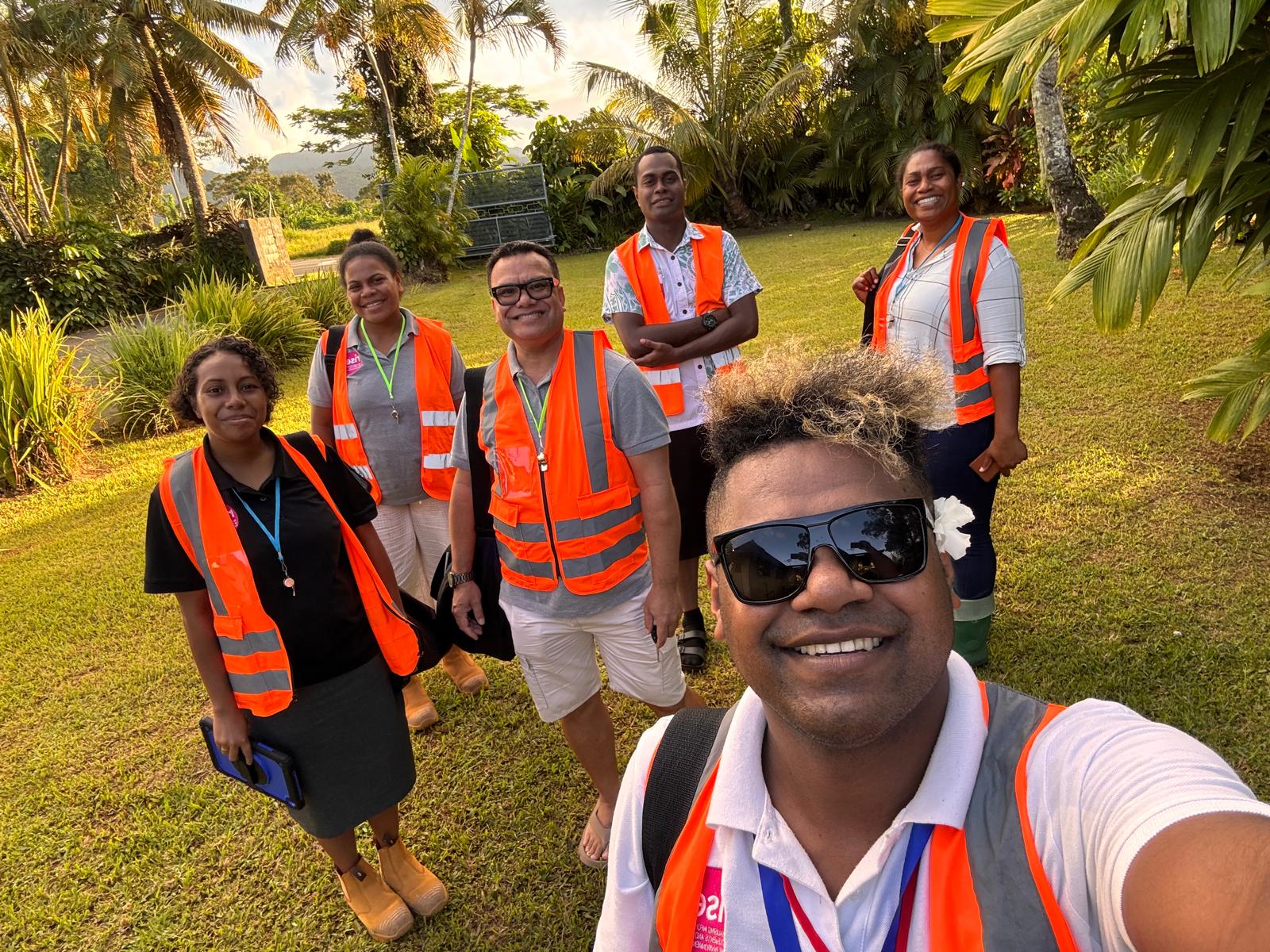
Cover image: Field Research Assistants Sereana Seavula and Oni Lewakulati, Assessment Program Manager Autiko Tela, Junior Field Research Assistant Mesuilame Ramacake, Field Team Leader Meiva Setoka, Research Field and Laboratory Assistant Taniela Waka ready to distribute albendazole tablets.
